

Home Blog Page 15

Sensitive in a Relationship? Clear Requests and Kinder Boundaries

images (22)

A change in someone’s tone can stay with you long after the conversation ends. A thoughtful message can brighten your whole day. If you feel things deeply, a close relationship may bring both lovely moments and questions you cannot easily put down.

You do not have to become less caring to feel more comfortable. Start by separating what happened, what you think it might mean and what you would like to ask. That gives your feelings a place in the conversation while leaving room for your partner’s experience too.

A useful place to begin

“I noticed this, I felt this, and I would like to ask this.” You can be honest about your feelings without deciding in advance what another person intended.

What does “highly sensitive” mean in a relationship?

Some people use highly sensitive person, or HSP, to describe noticing and responding strongly to stimulation and emotional details. Elaine Aron’s HSP questions and answers explain the term in its research context. It is not a clinical diagnosis or a ranking of who loves more deeply.

You might need a quieter setting to enjoy a conversation, more time to consider a change of plans, or clearer words when a message feels ambiguous. Another sensitive person may enjoy different things. Remembering birthdays, liking surprises or becoming upset during an argument cannot establish a personality type on their own.

If you think of yourself as an empath or value psychic insight, you may find it meaningful to pause and notice your impressions. Let an impression suggest a kind question. It cannot give you permission to speak for your partner or treat an unspoken feeling as a confirmed fact.

Separate the event from the story around it

1. What happened?

“They replied ‘fine’ after I suggested dinner.” Keep this part to something you could both recognize.

2. What am I wondering?

“I am worried they are annoyed.” This describes your uncertainty; it does not settle what they meant.

3. What could I ask?

“Does that plan work for you, or would you prefer something else?” Give them space to answer.

This approach is useful when a small detail begins to feel like the whole relationship. You can care about the detail and still check your interpretation. If you already asked and received a clear answer, notice whether repeating the question is bringing clarity or keeping you in a loop.

Make important dates and gestures easier to understand

Relationships_birthday_couple

An anniversary may mean a great deal to you while your partner puts more meaning into everyday acts of care. Neither preference tells the whole story about love. Talk about what would feel thoughtful before the occasion becomes a test neither of you agreed to take.

Try: “I would love us to mark our anniversary. Would you enjoy a quiet dinner together?” You can also explain what you do not want: perhaps a large surprise party would feel uncomfortable, even though a handwritten note would mean a lot.

Ask about their preferences as well. A shared reminder or a simple plan can be a caring agreement. The aim is to understand each other, not to keep a secret tally of who remembers more.

Free conversation starter: find words for one situation

Choose what you want to talk about

This helper offers example words and a small next step. It does not score your sensitivity, predict a response or send a message. You do not need to enter a name or private story.


You can use the three cards above without the helper: name what happened, describe your uncertainty and make a clear request. For an unclear text, try asking what the sender meant before drawing a conclusion.


Give a request room for an answer

A clear request is specific enough to discuss. “Could we talk somewhere quieter?” gives you both something practical to consider. “If you cared, you would know what I need” leaves the other person guessing and makes disagreement feel like proof of failure.

Your partner can suggest another plan or say that they cannot meet a particular request. You can then consider what works for you. For example, you might agree to leave a busy event separately rather than requiring both people to stay or leave together.

Love is respect’s guide to setting boundaries describes the importance of communicating limits and respecting each person’s choices. A boundary is not a demand for passwords, constant reassurance or permission to control friendships.

Plan a pause that still respects the conversation

images (23)

When you feel overloaded, you can say: “I want to talk about this, but I need a pause so I can listen properly. When would be a good time to come back to it?” Agree on a check-in that you can both realistically keep.

A walk, a quieter room or a little time alone may help you feel ready. Choose what suits the moment; there is no universal waiting period that proves you have calmed down. If you enjoy a private reflective practice, a gentle self-love ritual can be a way to choose kind words and one practical act of care before returning to ordinary life.

A pause should leave a path back to the issue. Repeatedly disappearing, refusing every discussion or using silence as punishment will not become respectful simply because someone describes themselves as sensitive.

Look at care over time, not a single perfect reply

Notice whether both of you can ask questions, apologize, change a plan and disagree without humiliation. A partner may misunderstand a request and then make a thoughtful effort to understand it. That pattern matters more than expecting every first response to be flawless.

Fairness also matters. If you arrange every meeting or provide support that never comes back to you, name the specific pattern and ask for a change. You do not need to prove that you are the more sensitive person before asking for mutual effort.

If speaking honestly brings threats, intimidation or repeated ridicule, prioritize support and safety over finding a more polished script. Sensitivity does not require either person to accept mistreatment.

Questions about sensitivity and relationships

1. Does being sensitive mean something is wrong with me?

Sensitivity is not a character fault. People differ in what they notice and how much stimulation they enjoy. A label is less useful than understanding your needs and how you treat each other.

2. Is highly sensitive person a diagnosis?

No. Highly sensitive person is a term associated with sensitivity research and self-understanding, not a clinical diagnosis. This article and the conversation helper cannot diagnose you.

3. Can I know what my partner feels through intuition?

An intuitive impression may give you something to reflect on, but it does not confirm another person’s thoughts. Ask an open question and allow their answer to differ from your first impression.

4. Does remembering every anniversary prove I am more sensitive?

No. Remembering dates can reflect habit, personal meaning or a good calendar. Tell each other which occasions matter and agree on a way to mark them that feels comfortable for both of you.

5. What if I prefer planned dates to surprises?

Say so directly. You might enjoy a small surprise while wanting advance notice for travel, visitors or a busy evening. There is no single correct preference for a sensitive person.

6. How can I ask what a short text means?

Start with the uncertainty instead of an accusation: I was not sure how you meant that message. Could you explain? Listen to the reply before deciding what the message says about the relationship.

7. Is a boundary the same as controlling my partner?

A boundary describes what you can participate in or what you will do to care for yourself. A request leaves room for an answer. Demanding passwords, restricting friendships or punishing a refusal goes beyond a respectful boundary.

8. How do we take a pause without abandoning the conversation?

Say that you want to return to the subject, explain what would help you settle, and agree on when to check back. A pause should not become an indefinite disappearance or a way to avoid every difficult topic.

9. What if my partner calls me too sensitive?

Ask for a specific, respectful discussion about the event and each person’s needs. Repeated ridicule, intimidation or pressure is not solved by finding a better label for yourself. Seek support if speaking honestly feels unsafe.

10. What does the conversation helper tell me?

It provides a sample request and a practical next step for the situation you choose. It does not measure sensitivity, score compatibility, predict a reply or send anything to your partner.


How to Cast The Venus Love Spell

download (10)

Magic love spells can be used to attract true love, attract a new love, bless a new love relationship, maintain unconditional love, make love return, and to establish stability in a relationship.

Begin the spell on Friday, the day traditionally associated with Venus. Repeat the ritual for seven consecutive nights.

    • You will need:
    • 1 red cloth heart
    • 1 red candle
    • 1 mirror

il_340x270.425180607_mshs

    • 1 white cloth
    • 7 pins
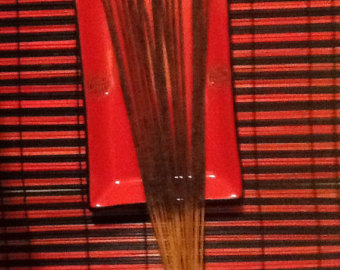
    • 1 scent of venus incense stick
    • Ylang Ylang oil

This spell is cast skyclad (naked) in absolute privacy. After a cleansing and relaxing bath, perfume your body with the erotic oil Ylang Ylang. Choose a magick area in your bedroom, lay out the white cloth ans position yourself in front of the mirror. Cast a protective circle, light the red candle and incense, focus your sexual energy and chant:


    • I call to thee, beloved one,
    • To love me more than anyone,
    • Seven times I pierce thy heart,
    • Today the magick of Venus starts.
    • I bind thy heart and sole to me;
    • As I do will so mote it be.
    Repeat the chant seven times, placing pins in the heart one at a time after repeating Seven times i pierce thy heart. Blow out the ceremonial candle and incense, leaving the pins in the heart until the following night.


What Does Your Lingerie Say About You and Love

The signature of a truly fabulous woman is her lingerie drawer. Everyone can dress up to the nines, but it’s what lies beneath that counts. Yes, it’s true – your lingerie says a lot about you!  What’s your wonder(bra)ful personality type? We’ll tell you.

  • download (3)Designer Lingerie
    When you buy by the brand and inevitably wear a matching set, your hope is to fall in love with a successful member of the establishment. Sexy lingerie confirms that you are his attractive partner. The roles in your love life are deeply established and contingent on him continuing on the road to success while you work your best to stay gorgeous as his reward.
  • White Cotton & Sensible
    Most girls start out here and evolve as their world-view and self-image begin to change. Quite a few return to this combo and its comfort and convenience underscore a desire for a traditional love life. Maybe skip the white picket fence, but a good husband and eventually having children are central to the picture of where you see yourself and your life in the hopefully not-too- distant future.
  • Thong
    This colorful and provocative bottom often has a revealing high strap. What you are really looking for in love, though, is a man who sets limits with you. Your deepest desire is to be told to dress more conservatively and since you so want to please the man telling you this, you comply. You are provoking to test the limits because you want a father figure to strongly school you in the ways of love.
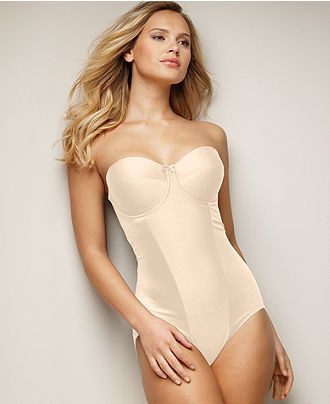
  • 630e2918761609e54edb187715ceb278Body Shapers
    These trendy undergarments are made to hold in your belly, waist and often your thighs. If being chunky ever comes back in style, these will be relics from a bygone era. Something this trendy and appearance altering reveals your desire for acceptance. A man should be overjoyed if you are wearing this type of lingerie, as it reveals you to be submissive and living to please him at all costs.
  • Panty Hose and a Boring Bra
    In covering your legs and approaching your intimate wear with practicality over everything else, you are holding back in looking for love. Perhaps there is a broken heart in your past that taught you that love hurts. Now you make sure to reveal nothing to the world that might inspire such a hurtful occurrence again. It is not that all hope is lost, though. Your commitment to healing by emphasizing personal comfort over style is a commitment to getting better in order to be the best possible partner should a good relationship come along.
  • Bikini Bottoms and a Push-Up Bra
    In an attempt to look your best, sometimes you have to augment what is there … but don’t call it false advertising. In making the most of what you have you are advertising yourself much like a product. When you treat yourself like a commodity that will go to the highest bidder, your true feelings about love liken it to a commercial transaction: deliver a quality product to the customer and you are both satisfied. That is, until one of you gets the urge to go “shopping” again.
  • Sports Bra / Workout Underwear
    If you work out often, you will get in the habit of wearing the underwear that is most comfortable for physical exertion. This is also an indicator that your hopes for love are completely in your own control. Your confidence and dedication to being the best you can be and staying in great shape translates into only accepting healthy relationships into your world and not modifying who you are to fit the needs of a partner.
  • Garter Belt with Stockings and Lace
    images (5)Don’t you just love to take the extra time to add a sex appeal that causes more than a few gawkers to get the hint? This sense of drama drives your hopes for love. You want a rebel and a rock star all rolled into one and you might break a few hearts along the way as you search for this demigod of a stud. What you might find along the way is that all that drama and excitement only ends up scaring the good ones away and love only becomes more difficult to attract.

  • Corset
    The old school way of modifying your appearance is also a way of training your body to eat less and getting the gorgeous hourglass figure you deserve ahead of the diet. Your hope for love is described in the willingness to put up with a little pain and modify what there is to be gained, all in the name of being who you are: a true partner willing to put the work into a relationship to make it work.
  • Underwear as Outerwear
    This is a trend that pretends to be revealing but in reality is a refusal to start the healing. You will not see a girl experiment with this stage of style for long, but a woman who adopts this look is letting the world know that she has a broken heart and does not want to let it heal. Long-term continuation of this look can lead to a self-destructive streak.
  • Men’s Underwear
    download (4)Some of the most feminine women wear men’s underwear. It is not a political statement of equality. In fact, women who avoid the trappings of femininity in order to maximize comfort are often women who are quite secure in their bodies and sexuality. These are women who might even be experimental and see love as a fluid relationship that need not be tied to monogamy if partnership pleasure can be found somewhere down the road of excess.

  • Commando
    Going out without any underwear on is called, “going commando.” This label implies a wild recklessness, but nothing could be further from the truth. Commando is your way of being in complete control. Once a lover knows you wear no underwear, the idea is always present that what you possess is at the ready – this heightened sense on his part makes intimacy between you two yours to control. There is nothing for him to remove; he must await your permission. Commando mission accomplished: Complete control acquired!

If more than one style above would apply to your choices in lingerie, perhaps you are in transition and are subconsciously changing your aspirations in love. Pay attention to what in a man attracts you and how that differs from your taste in guys a year ago – you will find that you are changing your lingerie style as your hopes for love shift to different desires. It is totally natural to change what you will let him take a peek at as your ideal of who he should be evolves.

How to Cast the Innocent Attraction Spell

This spell could help you to feel more attractive, to  gain more self-confidence in relationships, to attract your desired love partner (current or new) to you like never before.

STRONGEST BLACK MAGIC MAGICK LOVE SPELLS FAST ACTING POWERFUL PROTECTION SPELL RITUALS STRONGEST ADVANCED BLACK MAGIC DEATH SPELLS FAST MONEY SPELLS (2)You will need the following items for this spell:

  • Red/pink (pen/colored pencil/marker/crayon)
  • Full moon (optional)
  • Paper (About a fourth of the page)
  • Voice
  • Night/Bedtime
Love is usually the most popular spells, even if Im not that interested. This will make whoever you love to feel the same way about you. Use wisely.

Casting Instructions for ‘Innocent Attraction Spell’

images (40)***Step 1*** Write down your crush’s full name in the red/pink writing utensil, then draw a heart around it. Under the heart, write “will fall in love with (your name here)”. Draw more hearts around your names.

***Step 2*** Fold the paper three times, and hold it to your chest, thinking about the person you’re in love with. Visualize them clearly.
***Step 3(optional)*** You don’t have to do this, but it will strengthen the spell. Hold the paper in the moonlight, thinking about him/her.

***Step 4*** Kiss the paper, and hold it so it barely brushes your lips. Close your eyes and sing this: “Let my love fall for me.Let he/she want to be with me. We will love each other for eternity. This is my will so mote it be.”

download (10)***Step 5*** Thank the goddess of love,then put the paper underneath your pillow as you go to sleep.

***NOTE*** Yes, you have to memorize the song. You can do steps 3-5 every night for a week and it will more likely happen, but you can also just keep the paper underneath your pillow until it happens, while falling asleep thinking about your crush. Make sure to thank the goddess every night.

How to Cast the Love Perfume Spell

images (43)

The benefits of this perfume are. You can attract whom you love. Your lover will come close to you and will listen to you. People will start liking you. Even those who are jealous of you will change their attitude towards you. You can start dominating the people. If you are going in for an interview and you thing that it will not be in your favor, but after applying this perfume you will pass the interview easily. If you are working in an office you will have no problem with your bosses. Your boss will be lenient with you. People will thing positive about you. You will be able to convince any body very easily.
 You will need the following items for this spell:
  • Perfume
  • Soap
  • Rose petal
  • Lipstick
  • Lotion
  • Water
  • Two pieces of yar
  • Jewelry
Use this perfume when near your crush and it will attract him to you!

Casting Instructions for ‘Love perfume Spell’

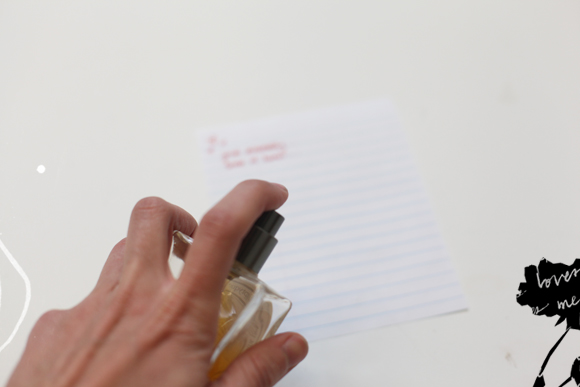
First mix about a 1/4 cup of water with 30 sprays of perfume. Shake the two together in a spray bottle. Next mix in lotion and soap. While doing this say: ”I use these things to make me pretty, let (insert name of crush here) relize that I am pretty in many ways.” Set aside. Now take one piece of string and say: ”let this string represent my lonesome soul.” Pick up the other string and say: let this piece of string represent the beautiful soul of (insert name of crush here). Tie the strings In a knot and leave them in the perfume. Put on the lipstick and kiss the rose petal. Place the rose petal in the perfume. Now place the jewelry in the perfume and let it sit for 5 mins. Wear the jewelry and perfume when you see your crush and he will be attracted to you!

Write Your Own Spell: 5 Steps and a Free Worksheet

By Willette Moore

A personal spell can begin with a sentence you have been trying to say. Perhaps you want to speak more honestly, prepare for a new opportunity or mark the end of a difficult chapter. Writing the practice yourself gives you room to choose words and symbols that belong to your situation.

You do not need to make the language grand. Start with something you understand and can return to. If spellwork is meaningful in your spiritual life, the writing can become a deliberate moment of attention: this is what matters to me, this is how I will express it, and this is what I will do next.

Begin with your part of the story. “I want to listen without interrupting” gives you something to practise. “They must agree with me” places the outcome in someone else’s hands. A useful draft leaves room for an honest answer.

New to the subject? The beginning witchcraft guide explains intention, ritual and source notes. This workshop takes the next step: composing one small practice in your own words.

download (7)

A five-part map for your draft

1. PurposeName your choice.
2. SymbolChoose what it means.
3. WordsSay what is true.
4. PracticeGive it a shape.
5. ReviewNotice what happened.

Use the map as a writing aid. It is not a test of belief or a formula that obliges the world to respond. You can keep a part simple, change the order to fit your practice or leave out an object you do not need.

1. Name the purpose you can take part in

Write the wish first, even if it feels untidy. Then ask what part of it belongs to you. Wanting a relationship, a job or an apology is understandable, but those outcomes involve circumstances and other people. Your intention can describe the qualities and choices you want to bring.

  • A difficult conversation: “I will explain what I need and listen to the answer.”
  • A new opportunity: “I will prepare carefully and make my experience clear.”
  • Moving on: “I will stop checking for a message tonight and give myself something kind to do.”

Read your sentence aloud. Does it sound like a choice you can make? Could you tell whether you had tried it? If it asks another person to feel a particular way, rewrite the part you can choose. The love spell ethics guide explores that distinction in more detail.

2. Choose a symbol you understand

A symbol works best in a personal draft when you can explain its place. A key drawing might remind you of an opening; a smooth stone might stand for the steadiness you want to practise. These are examples of personal associations, not universal instructions about what every object means.

Try the sentence: “I chose this because…” If the only answer is that a shopping list told you to buy it, pause and consider a simpler choice. A sketch, a word or a familiar item may say more to you than an unfamiliar ingredient.

When a symbol comes from a particular culture or religious tradition, learn its context before claiming it as part of your own practice. Keep the source and your personal interpretation separate in your notes. Our witchcraft symbols guide offers a starting point for that kind of study.

For this exercise, use paper and a pen. You do not need to swallow, burn, scatter or put anything on your skin. If you like candle symbolism, draw a flame or use a battery candle. The U.S. Fire Administration recommends considering flameless candles; paper and fabric should never be held above a real flame.

3. Write words you are comfortable saying

Give the intention a voice. You might write a direct statement, a short invitation or a line of poetry. Choose a style that feels sincere instead of borrowing a voice you feel obliged to perform.

One original example:

“May I speak with care and leave room to listen. I can be clear without making the answer mine to choose.”

The first sentence names a quality. The second names a boundary. Neither promises that the conversation will end in agreement.

You can replace “May I” with “I choose to,” write in a language you know well or keep the words silent. Rhyme is optional. Avoid language you do not understand just because it sounds ancient, and do not assume that longer wording makes the practice stronger.

Before keeping a line, ask whether it says something you actually mean. “I am completely fearless” may feel false on a nervous day. “I can take one careful step while feeling nervous” may be easier to return to honestly.

4. Give the words a simple beginning and ending

Decide what you will actually do. A complete practice can be small: clear a place on your desk, read the intention, fold the paper beside your chosen symbol and put the materials away. The sequence marks a moment without needing a special sensation.

  1. Begin: Sit comfortably and look at the sentence you wrote.
  2. Express: Read your words, silently or aloud, and notice what they ask of you.
  3. Mark: Fold the note, touch the drawing or place the paper in your journal.
  4. Close: Put the materials away and name the next ordinary action.

Choose timing because it helps your practice fit your life. Some people give a Moon phase spiritual meaning; others use a quiet evening or a regular journaling time. The Moon phase guide explains the cycle if you want to explore that symbolism. Timing does not establish a deadline for a relationship, message or other outcome.

5. Review the practice without turning it into a verdict

Give yourself a sensible point to revisit the note: after the conversation, after preparing the application or when you next sit down with your journal. Write what you actually did before deciding what it meant.

For example: “I wrote down my needs and asked whether we could talk on Saturday” is an observation. “The ritual made them agree” is a causal interpretation that the event alone does not establish. You can value the spiritual moment while being precise about what happened.

If the result disappoints you, look at the practical circumstances and your own choices. You can edit the plan, change the intention or decide that this practice has served its purpose. There is no automatic 28-day rule, compulsory repetition or need to purchase stronger work.

A complete example: preparing for an honest conversation

Purpose: I want to explain one need clearly and hear the other person’s view.

Symbol: Two small circles on a card, representing two people with separate choices.

Words: “I can offer honesty and make space for an answer.”

Practice: Read the card, write the sentence you want to begin with, then put it beside your notebook.

Action: Ask whether there is a comfortable time to talk.

Review: Afterwards, note whether you spoke clearly, listened and respected the answer.

The example stays useful even if the answer is not the one you hoped for. It centres conduct you can recognise rather than treating agreement as proof of spiritual success.

8aee882a5b3b5dac578139932a013517

Free spell-writing worksheet

Enter an intention and one action you can take. The optional fields let you add your symbol and your own words. The worksheet arranges your notes into a draft; it does not calculate a power score or predict what will happen. Your entries are not sent or saved by this worksheet. Copy anything you want to keep before leaving the page.

Keep a draft you can return to

Save the date, the source of any tradition-specific idea, your own wording and what you chose to do. That gives a future version of you something clear to revisit. You do not have to keep every draft forever, and you can protect personal names and details when storing or discarding notes.

A spell written in your own voice can be modest and still feel meaningful. Let it express a value you want to live, give that value a symbol if you wish, and leave space for life and other people to be more complicated than a single sentence.

Spell-writing questions

1. Do I need special powers to write a spell?

You can write a personal symbolic ritual without claiming special powers. Begin with a purpose you understand, words you mean and an action you can choose. A formal tradition may have its own expectations for particular rites.

2. Does my spell have to rhyme?

No. Rhyme can make words memorable if you enjoy it, but ordinary sentences are fine. You can also write silently. Clear meaning matters more for this exercise than performing a particular style.

3. What if I choose the wrong words?

You can stop, cross out a phrase and try again. In this personal exercise, a wording mistake is an editing problem, not evidence that you have caused a supernatural disaster. Choose language that feels honest and respects other people.

4. Can I use a spell I found in a book?

You can study a shared example while respecting its source and any limits the author or tradition places on its use. Keep the source in your private notes. If you publish your own version, write original wording and do not present someone else’s text as yours.

5. Do I need herbs, crystals or a candle?

Not for the written practice here. Paper and a pen are enough. A drawing or an ordinary object can carry your chosen symbolism without requiring you to burn, drink or apply unfamiliar materials.

6. Can I write a spell about a particular person?

You can write about your own feelings, boundaries or conduct around that person. Leave their feelings and decisions to them. An intention to communicate clearly is different from requiring someone to love, forgive or contact you.

7. Must I wait for a particular Moon phase?

Only if that timing matters to the practice you have chosen. You can write and revise your draft whenever it suits you. A lunar association is part of a spiritual framework, not a guaranteed deadline for an outcome.

8. How long should the words be?

Use as much space as you need to state the purpose clearly, then remove phrases that do not help. A sentence or two can be enough for a simple personal practice. Length does not establish spiritual strength.

9. What should I do with the finished paper?

Keep it in a notebook, fold it beside a meaningful object or store it privately. You do not need to burn or bury it. When you no longer need it, protect any personal information and choose an ordinary suitable disposal route.

10. When should I review the spell?

Choose a review point that fits the action: after the conversation, after practising for a few days or when you next open your journal. This is a chance to learn from what happened, not a countdown proving that magic has worked.

11. What if the result is not what I hoped for?

Separate what you chose to do from what was outside your control. You can revise the practical plan, change your intention or stop the ritual. Disappointment does not mean that you owe anyone money for stronger work.

12. Does the worksheet predict whether my spell will work?

No. It arranges the words you enter into a readable draft and a practical next step. It does not measure psychic ability, rate spiritual power or predict another person’s choices. Your entries stay in this page and are not saved by the worksheet.


How to Overcome Your Neediness

Fotolia_72328843_Subscription_Monthly_MA lot of us go through life feeling needy of affection, approval and attention from others. This causes us to focus on the “outside” while disconnecting with our inner space of being. Neediness always arises from lack based thinking and a self-critical mindset. People who are self-critical are usually always seeking approval and affection outside themselves and hence end up becoming “needy” in their behavior. Also, a lack based mindset causes people to think that they need to “cling” to someone because they feel that life will not bring in new/better relationship if they let go of this one. Neediness is a highly toxic mindset and it immediately makes your point of attraction to be rooted in lack. Overcoming the attitude of neediness is all about letting go of viewing life from the lens of lack and developing the mindset of self-love through self-alignment.

Do you feel like they’re pulling away from you? People tend to pull away when they feel smothered. To regain the balance in a relationship, you have to be willing to give the other person some space.

Your Relationship is Energy

Think of a relationship as energy. If a couple is equal in their attention and affection, there is balance and harmony in their relationship. But if one person gives more than the other person is willing to give, the balance shifts. Then one person becomes distant and the other person becomes needy and desperate for the affection they once had. It can become a vicious cycle and one that has the ability to intensify. The result is a serious relationship crash and burn.

Space and Room to Breathe

Being clingy in a relationship won’t get you the closeness you want. In fact, it will push the object of your affection away. But if you give them space and room to breathe, you’ll draw them closer. It may sound counterproductive, but in order to hold onto something in a genuine way, you need to be willing to let it go.

There’s a big difference between “I want you because I need you,” and “I need you because I want you.” If you want someone desperately because you need them to make you feel whole or complete, that’s a lot of pressure to put on a person and a relationship. It scares people and makes them run and hide no matter how much they liked you in the beginning. When you need someone because you genuinely want to be with them, that’s an entirely different feeling. When you both want to be with one another, the feeling is mutual and the energy between you is equal.

You’re Needy if… 

girl-angry-with-text1. You Call/Text Excessively: What’s excessive? Calling or texting someone several times before they return your call or text is excessive. Don’t assume they’re ignoring you. They could be driving, in the shower or busy at work. They’ll call or text you back. If you call or text them too many times, when they finally get back to you it won’t be pleasant.

2. You Need to be With Them Every Second: Don’t mistake their desire to spend time with friends, family or pets as a lack of affection for you. You don’t have to spend every second of the day together. If you did, you wouldn’t have much to talk about. They’re busy and their life doesn’t revolve around you. Try being busy yourself so you’re not obsessing over not being together. Savoring your alone time keeps you from pushing them away.

3. You’re Constantly Jealous: Being in a relationship with someone you don’t trust makes you miserable. Also, being with someone who doesn’t trust you makes you miserable. Unless you’ve had the exclusivity talk, assume they’re dating other people, and you should be too. If you’re in a committed relationship, you should be able to trust your partner and not feel constantly jealous. Even if they’re speaking to the opposite sex, you shouldn’t worry that they’re cheating on you. Jealousy leads to anxiety and anxiety leads to neediness. You’re pushing them away.

Be Independent

download (4)We all want to feel needed and wanted, but there is a limit. Independence is an attractive quality, and you don’t seem independent if you constantly need to be around your partner. Neediness isn’t attractive. It pushes peoples away from you and makes you a lonely person. If you have a tendency to be needy, I suggest you do the opposite of what your needy instincts tell you to do. For example, if you feel like texting them over and over before they’ve responded to your first text, stop yourself. Find something else to do.

Candle Colour Meanings: Choose a Symbol for Your Intention

Choosing a candle can be a small act of intention. You may reach for pink when you want to be kinder to yourself, blue before a difficult conversation, or white when you need a fresh page. The colour gives your attention somewhere to land.

There is room for personal meaning here. A colour that feels peaceful to one person may bring up a different memory for another. Use the guide below as a starting point for your own practice, and let a symbol earn its place by making sense to you.

Start with the intention

Finish this sentence: “Today I want to bring more _____ into the way I act.” Choose a colour that reminds you of that quality. A candle you already own, an LED light or a coloured note can all serve as a focus.

Free candle-colour suggestion

Choose a focus to see a colour suggestion, what it can represent and one practical next step. The suggestion uses the focus you select; you can adapt it to your own associations.

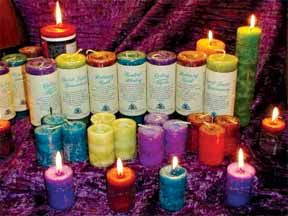
Candle colour meanings at a glance

These are common associations in contemporary candle practice. The question beneath each meaning turns a broad symbol into something you can use. You do not have to use the same colour forever or accept every association in a chart.

White

Symbol: Clarity, peace and a fresh start.

Try this: Name the one thing you want to understand more clearly.

Red

Symbol: Courage, passion and purposeful energy.

Try this: Choose a brave step that respects everyone involved.

Pink

Symbol: Tenderness, friendship and affection.

Try this: Think of one way to show care without asking for a particular response.

Yellow

Symbol: Learning, ideas and clear expression.

Try this: Write the question you want to explore before seeking an answer.

Green

Symbol: Growth, renewal and abundance.

Try this: Choose something you can nurture patiently, such as a habit or a skill.

Blue

Symbol: Calm, honest communication and steadiness.

Try this: Practise a sentence you want to say clearly and kindly.

Purple

Symbol: Intuition, spiritual reflection and wisdom.

Try this: Record an impression and a question to reflect on later.

Black

Symbol: Boundaries, protection and release.

Try this: Name something you are ready to decline or stop carrying.

Brown

Symbol: Grounding, home and stability.

Try this: Choose an ordinary action that makes your space feel more settled.

Orange

Symbol: Creativity, enthusiasm and initiative.

Try this: Give a small idea a practical first step.

Gold

Symbol: Appreciation, achievement and purposeful work.

Try this: Recognise a real effort, then choose the next manageable task.

Silver

Symbol: Lunar symbolism, dreams and reflection.

Try this: Keep a brief dream or reflection note without forcing a prediction.

Grey

Symbol: Balance, uncertainty and a pause for perspective.

Try this: Write what you know, what you do not know and what can wait.

images (46)a1ba4e0679daa08b85333968048263a9candles

What about lavender, copper and other shades?

A shade can add nuance to a meaning you already like. Lavender may suggest a gentler kind of reflection, while indigo may suit a quiet, inward focus. Magenta can combine the warmth of pink with the boldness of red. These are optional ways to describe your intention, not levels of power.

Light blue can remind you of patience, and royal blue of steady, confident expression. Emerald green can represent enjoying growth and connection; dark green may invite you to examine ambition or comparison. Copper can be a symbol for the everyday work behind a goal. Choose a shade because its meaning helps, rather than worrying that a slightly different candle will spoil the practice.

Make the meaning personal

Try writing three short lines before you choose a candle:

  1. My association: “To me, this colour brings to mind…”
  2. My intention: “I want to make more room for…”
  3. My action: “One way I can practise that today is…”

For example, yellow might remind you of a bright kitchen where you felt listened to. Your intention could be to speak more openly, and your action could be preparing one honest question for a conversation. Someone else may use yellow for study. Both choices can be meaningful without making the colour a promise about what happens next.

For love, the difference between pink and red can be a useful prompt: are you looking for tenderness, courage, passion, or a combination? Our love candle ritual guide includes a private intention journal and examples for new connections and willing partners.

Choosing a candle for intuitive reflection

If you value psychic practice, purple, white or silver may feel like natural companions for a reflective moment. You might use the light while writing a question, noticing an impression or recording a dream. Keep what you observed separate from the meaning you give it, especially when another person is involved.

Silver is sometimes associated with clairvoyance and lunar symbolism. That association can be a personal cue to pause and listen inwardly; it does not establish that a vision is accurate. You can appreciate an intuitive impression while still asking questions and checking what is happening in ordinary life.

Shape, scent and the candle you already own

A plain candle is enough for this practice. A taller candle is not automatically stronger, and an elaborate shape does not prove a deeper connection. Consider whether the candle suits its holder and your space, whether you enjoy its scent and whether you can follow its instructions comfortably.

You can keep one suitable candle for repeated reflection if that feels right to you. If you prefer a fresh symbolic beginning, start a new journal page rather than assuming you must buy new wax. An unlit candle or a flameless light also lets you use colour without handling an open flame.

For a real candle, follow the label, use a stable holder and keep it attended and well away from anything that can burn. Extinguish it before leaving or getting sleepy. Do not add craft glitter, paint or loose decorations to wax. The U.S. Fire Administration’s candle guidance offers practical precautions. Our beginner candle guide and free preparation check can help you plan a simple session.

The most useful colour is one you can explain in your own words. Let it remind you of a quality you want to practise, then give that quality a place in your day.

Questions about choosing a candle colour

1. Does the candle colour determine whether a ritual works?

Colour gives you a symbol to work with; it does not establish a guaranteed result. A useful choice is one that helps you remember your intention. What you notice and do afterward matters more than buying a precise shade.

2. Can white replace a colour I do not own?

Yes. White is often used as a versatile choice in contemporary candle practice. You can also use an unlit candle, an LED light or a written colour name. There is no need to buy a set of candles before beginning.

3. Is a black candle unlucky or harmful?

The colour black is not inherently harmful. Many practitioners use it to represent boundaries, protection or letting go. If the symbolism makes you uncomfortable, choose another colour that expresses the same intention more comfortably.

4. Do I need a brand-new candle every time?

No universal rule requires a new candle for every personal practice. Reusing a suitable candle can be meaningful. Check that it remains in good condition and follow its maker’s instructions; do not use damaged containers or burn a candle past its stated stopping point.

5. Should I choose a colour for love or passion?

Pink can be a gentle symbol for affection, while red can represent passion or courage. Choose according to the quality you want to bring to a willing relationship. Neither colour can make another person want a relationship or override their answer.

6. Can candle colour improve my health or finances?

A colour can mark a personal intention, such as treating yourself kindly or working on a budget. It cannot diagnose illness, deliver treatment, predict an investment result or guarantee money. Use practical support appropriate to the issue rather than relying on a candle to resolve it.

7. What if two colour guides disagree?

Colour associations vary among traditions and individual practitioners. Check whether a guide is describing a particular spiritual path or offering a general reference. For your own informal practice, choose an association you understand instead of trying to combine every rule.

8. Can I use more than one colour?

Yes, if it helps you express a clear intention. Two colours can represent complementary qualities, such as kindness and honest communication. You can use coloured notes or flameless lights instead of adding more flames.

9. Are metallic candles and glitter suitable for burning?

Use only products intended to be burned as candles, and follow their labels. Do not add craft paint, glitter, foil or loose decorations to wax. A gold or silver object kept safely away from heat can provide the symbolism without altering a candle.

10. What does the free colour suggestion mean?

It pairs the focus you select with a common symbolic association and a suggested next step. It does not assess your personality, read your energy or predict an outcome. You are free to choose a different colour or use white instead.

7 Cohabitation Tips to Live Happily Together

135385166Cohabitation is a trend that has become increasingly popular among modern couples, but that doesn’t mean it isn’t a big step in a relationship. It is often said that cohabitation is the prelude to marriage, and that does make it a serious commitment.

Cohabitation can be exciting, but it also comes with its share of pitfalls. Use these 7 tips, and you’ll see that life can be so much better!

Define This Next Step

What does cohabitation mean to you? Is it a test to see if you can live happily together once you get married? Or, is living together enough of a commitment for you both? If this is a stepping stone or the end of the line for your commitment, you need to know before you move in together.

Don’t Lament the Disappearance of Your “Perfect” Partner

What happened to that guy with the clean apartment who always shaved his face and wore clean clothes? Who’s this burping, farting, and toenail-clipping-at-the-table guy who wears the same underwear two days in a row? OMG, he pees with the door open and never replaces the toilet paper! Now that you live together, you’re going to see the real, human side of your partner, just like they’re going to see the real, human side of you. They’re going to feel your stubbly legs, see you without makeup and with unkempt hair. They’re going to know you poop and get your period. Shocked? Get over it!

Make it Both Your Spaces

Your home should be a reflection of both your tastes. That can be hard to do if one partner gives up their home to move into their partner’s home. You don’t need two coffee tables, two couches, or two beds! The rule of thumb should be to keep the item that’s in the best shape. This is also going to require some compromise. You may have to sell something you love or at least put it in storage because your new home doesn’t have the space for it. That’s okay. Your partner will be giving up some of the things they love too.

images (47)Share the Chores

If you both work, there is no reason why you can’t share the household chores. Make a chore chart and stick to it. Decide how often the house gets cleaned. If one of you neglects your chores, the other is going to feel resentment and resentment is not part of happy cohabitation.

There is a fear common among anti-living-together people (most likely your mom or grandmother), that any woman who lives with a man she isn’t married to turns into a 1950s housewife. Suddenly she is cooking and cleaning and giving him sex for free! Unless you actually want to do all the cooking and cleaning, you don’t have to worry about magically turning into that woman. And as far as the free sex things goes, it might be a shock to those same anti-living-together people to learn that women enjoy sex just as much as men do. Sex isn’t a commodity, so you’re not giving anything away for free.


Have Your Own Hobbies

Just because you’ve taken the next step in your commitment and chosen cohabitation, it doesn’t mean you have to give up the hobbies and activities you enjoy. Keep doing what you love, outside of the house. Whether it’s a fitness class, community garden, or writing at Starbucks, stick to it.

Have Your Alone Time

You don’t have to be together 24/7. You each need your alone time. Go out with your friends and leave your partner at home. Send your partner out with their friends so you can enjoy a night of peace and quiet on your own. Give yourselves the opportunity to miss each other and have separate adventures so you can tell each other about them later.

download (20)Share the Bills

If you both earn money, you both pay the bills. If one partner earns more than the other, they can pay for more things, but each of you should be contributing financially to the lifestyle you lead and the home you keep. Like chores, if one person gets stuck paying for everything, resentment builds.

So how do you make your cohabitation work?

8 Signs You Aren’t Ready For A Relationship

be-in-a-relationshipI know what you’re thinking right now. “Of course, I’m ready for a relationship. It’s what I’ve been waiting so long for! I just need to know how I can get one started!”

Well, I’m certainly not arguing that you want a real relationship. I’m asking if you’re ready for a real relationship. That one’s tough to answer, because it entails really looking at yourself and your beliefs, attitudes and behaviors in a real, open, and honest way. And that’s never easy.

If you’re wondering if you’re ready for the next new thing, but aren’t totally sure, here are some clues that you might just have a little more renovation to do before you get back in the game.

1. You’re Still In Love With Your Ex

Rationalize all you want. Make every excuse. Tell yourself and anyone who will listen that you’re done, through, finito! But if your everyday world is booby-trapped with physical reminders and emotional landmines that consistently blow up and send you reeling into either fond or angry reminiscences about the one that got away–like the makeup she left behind in the medicine cabinet that you haven’t gotten around to tossing, or the T-shirt of his you still sleep in “because it’s really comfortable”–then chances are, you’re not over your ex.

What You Can Do About It

Sgirls night out: girl alone in a pubome people who have lost love, especially those who feel badly burned by a romance soured, take the “scorched earth” approach and banish every scrap of evidence—physical and emotional—of their former flames.  There’s certainly something to be said for the cathartic element of clearing away failed love in one fell swoop, however, by pretending your former partner never existed, you are likely refusing to acknowledge the truth of what went wrong in the first place.

The opposite extreme are those of us who just can’t let go of anything that reminds us of our exes. This often happens when lovers hope, openly or secretly, that the object of their former affection may be coming back. Again, this type of rationalizing and denial is only holding you back from moving ahead, because it keeps you stuck in the “emotionally unavailable” zone.

There’s an old saying that goes, “if you love something, set it free,” but what many don’t understand is that if you can “let things go” in a healthy way by honoring and integrating what you’ve learned into the present and moving ahead, rather than denying or ignoring the past—you will set yourself free as well. If it’s truly “meant to be,” that lost love may return, and if not, you’ll be ready to embrace something new.

2. You Think Being With Anybody is Better than Being with Nobody

nobody-picMany people feel the need to be in a relationship because, plain and simple, they’re afraid of being alone. Some use being in a relationship to validate their existence. Others have abandonment issues, and are constantly trying to fill an emotional void, that, like a metaphoric black hole, is not something that can ever be filled. Whatever the motivation, the core of most discomfort about being trapped in life at a “table for one” has to do with lack of self-esteem.

What You Can Do About It

Your mental house not only needs to be cleaned, but you also need to shore up structural damage. The first step you should take is making an honest assessment of broken behavior that has neither served you in the past, nor will further your cause in the future. Learning to differentiate between “being alone” and “being lonely” is a process that can take time, and may require professional assistance.

If you look into the mirror and don’t like what you see, or feel incomplete unless you’re in a relationship, a consulting a romance advisor to help shed light on problems that are staring you in the face that you still don’t notice might be the perfect place to get the relationship ball rolling in a more productive direction.

3. Everyone You Know is In a Relationship, So You Should Be, Too…

Peer pressure is a powerful thing, and falling prey to it can lead to poor decision-making, even as we get older. When all your peers seem to be paired up, and you’re left standing out in the cold, the impulse is often to hook up with the next even semi-sentient creature that comes along and project “happily ever after” on them, no matter how ill-suited a partner they may be.

What You Can Do About It

If friends and family are making you uncomfortable about being alone, or constantly trying to fix you up with all the wrong people, take a moment to step back from the “madding crowd,” and reflect on what it is you really want from your next long-term romance. As difficult as it may be to see the people you know contentedly coupled when you’re not, do your best to be happy for them, but stop comparing what they have with what you don’t–because it’s a waste of time and energy that would be better spent investing in yourself.

Of course, feedback from trusted friends can be a positive resource, but what will be of more value to you will be learning to trust your own instincts and appreciate that your needs are not necessarily the same as other people’s. When you have a clear idea of who you are and what you want, the universe has a way of bringing it into your life.

4. You’re a Romance Junkie

You love being in love. The thrill of the chase fills you with ecstasy. The first rush of passion is your favorite natural high. But when reality sets in, you begin to feel trapped. Suddenly, there are cracks in the façade, and your new love doesn’t seem as perfect as they did at first blush. Little by little, their flaws and idiosyncrasies begin to annoy you. Even things that drew you to that person in the first place begin to seem less than appealing. Your dissatisfaction grows, and you feel chafed by the confines of boredom as more and more, familiarity breeds contempt. So… you either A) break up with the person you once thought was perfect, or B) start seeing someone else behind their back.

What You Can Do About It

Grow up. Sound harsh? That may be true, but if you’ve got a revolving door on your love life because you love “the idea of being in love” more than the actual process of loving someone and having them love you back, you’re not ready for a mature relationship. Sure, it’s fun to be the kid in the candy store, but we all know stuffing your face with gobs of sweets is not something that’s going to end well, nor will happiness be found in grabbing at every shiny new thing that comes your way.

If you’re young and not ready to settle down, there’s nothing wrong with that, as long as you understand it yourself, and make it clear from the beginning to the people you’re dating that you’re not ready for the long haul yet.

5. You Think Having the Right Partner Will Solve All Your Problems

BN-KP215_1005BO_J_20151002144514Mr. Right. Prince Charming. Betty Crocker. Whatever your idea of the perfect partner is, there’s no such thing, nor is anyone going to sweep into your life and magically erase your every current woe. Long story short: If you believe that being part of a couple is the answer to all of life’s conundrums, you haven’t got your head screwed on straight.

What You Can Do About It

The most mutually beneficial love partnerships require a 50/50 share of the commitment, so it’s unrealistic to hope that someone else is going to put in 110 percent while you sit back and enjoy the profits. Love may be more important than money, but it is a resource to be invested wisely. Unless you’re a total gold digger, you’re going to have to be willing and able to hold up your fair share of the bargain, and in order to do that, you’ll have to build up some equity, as in self-worth.

Think about it. By letting someone else solve all your problems for you, you’re actually abdicating control of your own destiny. As much as a new romance may be a temporary fix for what ails you, in the long run, you might just wind up resenting a partner who has, in effect, bought you, and hating yourself for letting it happen. Is that what you really want? Likely not. When you’re not happy with your life, you’re the one who needs to change it for the better, preferably before inviting anyone else along for what may prove to be a bumpy ride for the both of you.