
Home Blog Page 2

Love Spell Glossary: Essential Terms Every Believer Needs

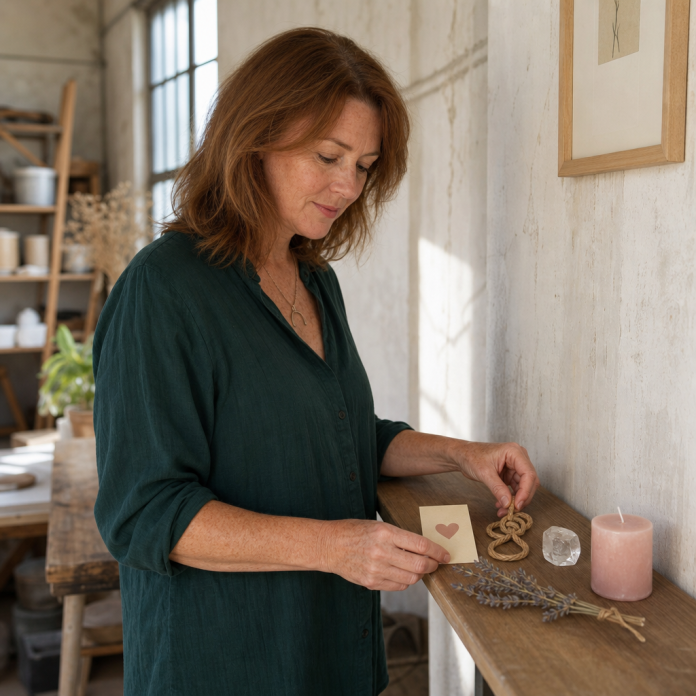
Woman organizing symbolic love-spell items in a bright studio

Love-spell vocabulary comes from many different places: historical religious practices, folk magic, ceremonial magic, modern witchcraft, New Age spirituality, astrology, crystal culture, and internet communities. The supplied glossary brought these terms together, but it sometimes presented modern beliefs as if they were universal traditions.

This revised glossary keeps the believer-friendly purpose while clearly identifying spiritual concepts as beliefs and avoiding the idea that every term has the same history or authority.

How to use this glossary: treat definitions as orientation, not as proof that a spiritual claim is scientifically established. When a term belongs to a specific culture or tradition, learn from sources connected to that tradition.

Core Love-Spell and Spiritual Terms

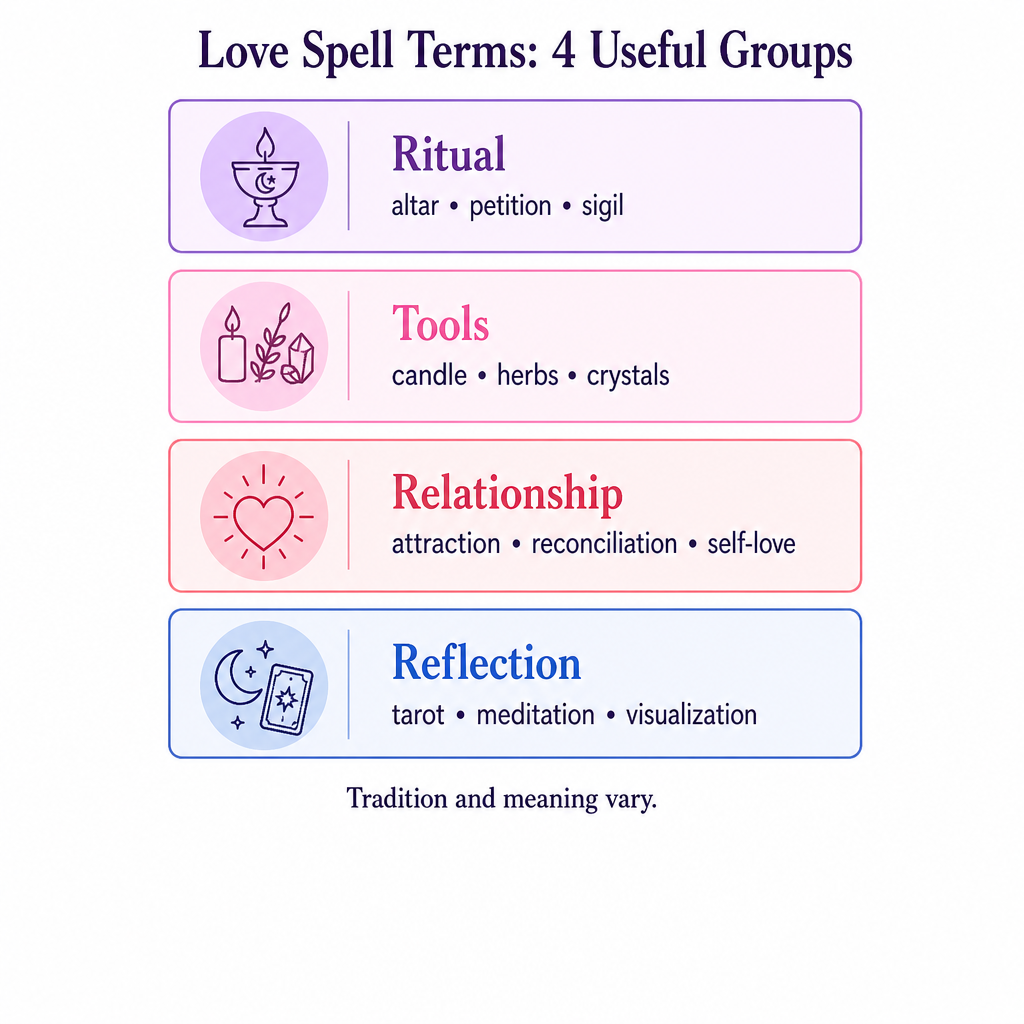
Love Spell Terms: 4 Useful Groups infographic

Affirmation

A repeated positive statement used by some practitioners to focus attention. It is better understood as a reflective tool than as a guarantee of an external result.

Altar

A dedicated surface or space used for ritual objects, prayer, reflection, or symbolic offerings. Altars exist in many religious and spiritual traditions, but their meanings differ.

Aura

A spiritual concept describing an energy field believed by some traditions to surround a person. It is a belief-based idea rather than a scientifically established physical field.

Binding spell

A term used differently across traditions. In relationship contexts, ethical practitioners may frame it around mutual commitment or symbolic connection; coercive interpretations raise consent concerns.

Blessing ritual

A ceremony or prayer intended to express hope, gratitude, protection, harmony, or goodwill.

Candle magic

A ritual practice using a candle as a symbol of intention. Color meanings vary by source and tradition.

Chakra

An energy-center concept associated with Indian religious and spiritual traditions and later modern wellness practices. The heart chakra is commonly linked symbolically with love and compassion.

Charm bag

A small pouch containing symbolic items such as herbs, written intentions, stones, or tokens, used in some folk and magical traditions.

Cord cutting

A modern symbolic release practice used to represent ending an attachment, pattern, or emotional tie.

Divination

A broad category of spiritual practices used to seek guidance or meaning, including tarot, pendulums, runes, and other systems.

Energy cleansing

A spiritual term for rituals intended to create a sense of symbolic clearing or preparation. Practices may include smoke, sound, prayer, water, or cleaning.

Full moon

A lunar phase with symbolic importance in many modern magical practices. Its ritual meaning is spiritual rather than proof of a causal effect on relationships.

Heart chakra

A modern English label for anahata, the fourth chakra in some Indian traditions, commonly associated with compassion and love.

Herbal magic

The symbolic use of plants in ritual. Historical and cultural meanings differ; herbs should not be assumed safe to ingest or burn simply because they appear in a ritual source.

Honey jar spell

A sweetening practice associated especially with African American folk-magic and hoodoo traditions. It is often described as a ritual intended to encourage warmer treatment or harmony.

Incense

A fragrant substance burned in religious or spiritual practice. Ventilation, allergies, pets, and fire safety should be considered.

Intention

The goal or purpose a practitioner brings to a ritual.

Knot magic

The use of knots, cords, or ribbons as symbols of intentions, promises, binding, or release in various folk and magical practices.

Love attraction spell

A ritual intended to symbolize openness to romance or compatible connection. A healthy framing avoids claims that it can force a particular person.

Love talisman

An object carried or kept as a symbolic reminder of a romantic, self-love, or relationship intention.

Manifestation

A modern term combining focused intention, visualization, belief, and often practical action toward a goal.

Meditation

A broad family of attention and awareness practices. It is used in both religious and secular settings and may be included before or after rituals.

Moon water

Water intentionally placed under moonlight in some modern spiritual practices and later used symbolically. It should be kept safe from contamination if it may contact skin.

Offering

A symbolic gift or act presented in a religious or spiritual context. Appropriate forms depend on the tradition.

Passion spell

A relationship-focused ritual associated with affection, romance, or sexual energy. Consent remains essential.

Pendulum

A weighted object suspended from a chain or cord and used in some divination practices. Its movements should not be treated as objective proof of another person’s thoughts.

Protection spell

A ritual intended to symbolize safety, boundaries, or protection from negativity. It does not replace practical safety measures.

Reconciliation spell

A ritual focused on healing, forgiveness, communication, or possible reunion. Reconnection still requires mutual willingness.

Rose quartz

A pink variety of quartz widely used in modern crystal spirituality as a symbol of love or compassion. Spiritual meanings are beliefs, separate from mineral facts.

Sacred space

A place prepared for prayer, meditation, ritual, or reflection.

Self-love spell

A ritual centered on self-respect, confidence, healing, or personal growth.

Sigil

A designed symbol that represents an intention, word, or idea in some magical systems.

Soulmate

A spiritual or cultural concept for a deeply significant relationship. Definitions differ widely.

Tarot reading

A card-based divination practice used for reflection or spiritual guidance. It cannot verify another person’s private thoughts or guarantee a future outcome.

Twin flame

A modern spiritual relationship concept describing an intense mirrored connection. It is not a scientific or clinical relationship category.

Visualization

The practice of deliberately imagining a desired situation or quality, often used in meditation, sports, therapy exercises, and spiritual practice.

Wax reading

The interpretation of shapes or patterns in cooled candle wax as a form of divination.

White candle

A candle commonly assigned symbolic meanings such as peace, clarity, blessing, or protection in modern magical practice.

Written petition

A handwritten statement of intention used symbolically in some rituals.

Zodiac compatibility

The comparison of astrological signs to interpret relationship dynamics. Astrology is a spiritual or cultural system, not a scientifically validated compatibility test.

Terms to Use With Extra Care

Some relationship-spirituality terms can become harmful when they are used to ignore another person’s choices. “Binding,” “soulmate,” “twin flame,” “destiny,” or “signs” should never be used as reasons to continue unwanted contact or to assume another person’s feelings.

If you are new to practical ritual structure, see How to Cast Love Spells. For candle symbolism, Can Candles Help With Love? provides more context.

Herbs, Crystals, and Ritual Tools

Tools can carry symbolic meaning without having to be described as physically powerful. A rose, a candle, a stone, or a handwritten petition may help a practitioner focus. They should not be presented as guaranteed mechanisms for changing another person.

For a broader herb reference, see Magical Herbs and Their Uses. Always separate symbolic use from ingestion, skin use, smoke exposure, and other physical-safety questions.

Traditional, Modern, and Informal Language

Type Examples How to interpret it
Longstanding spiritual/religious concepts altar, offering, meditation, chakra Meanings depend on the specific tradition and historical context.
Folk or magical practice terms honey jar, charm bag, petition, sigil Learn the cultural background rather than assuming one universal method.
Modern eclectic spirituality moon water, manifestation, cord cutting Often blends ideas from several sources and may have recent popular forms.
Modern relationship spirituality twin flame, synchronicity signs Use as personal spiritual language, not objective evidence about another person.

After a ritual, the article What Happens After a Love Spell Is Cast? explains how believers often interpret the period that follows.

Frequently Asked Questions

1. What is a love spell?

In this glossary, a love spell means a spiritual or folk ritual performed with an intention related to attraction, self-love, reconciliation, healing, harmony, or commitment. Beliefs and methods vary by tradition.

2. What is an intention?

An intention is the purpose you bring to a ritual or reflective practice. It can be as broad as becoming open to healthy love or as specific as improving communication in an existing relationship.

3. What is candle magic?

Candle magic is a ritual practice in which candles are used symbolically to represent an intention. Different traditions assign different meanings to colors and burning practices.

4. What is a reconciliation spell?

A reconciliation spell is a belief-based ritual focused on healing, forgiveness, communication, or the possibility of reconnecting. A healthy interpretation does not override either person’s choice.

5. What is a self-love spell?

A self-love spell is a ritual centered on confidence, self-respect, emotional healing, or personal growth.

6. What is manifestation?

Manifestation is a modern umbrella term for focusing attention, intention, visualization, and action on a desired goal. Spiritual interpretations differ widely.

7. What is a written petition?

A written petition is a note stating an intention or request that may be used symbolically during a ritual.

8. What is a sigil?

A sigil is a designed symbol used to represent an intention or concept in some magical traditions.

9. What is cord cutting?

Cord cutting is a symbolic release ritual used by some practitioners to represent letting go of an attachment, relationship, or emotional pattern.

10. What is a honey jar spell?

A honey jar is a sweetening ritual found in particular folk-magic traditions and is commonly described as a symbolic practice intended to encourage kinder or warmer interactions.

11. What is divination?

Divination is a spiritual practice used for reflection or guidance, such as tarot, pendulum work, or runes. It should not be treated as a verified way to read another person’s private thoughts.

12. What is a soulmate?

Soulmate is a spiritual or cultural idea describing a deeply meaningful connection. There is no single definition shared by all traditions.

13. What is a twin flame?

Twin flame is a modern spiritual relationship concept. It is not a clinical or scientific category and should not be used to justify unhealthy or unwanted pursuit.

14. What is spiritual cleansing?

Spiritual cleansing refers to symbolic practices intended to mark a fresh start or create a sense of ritual preparation, such as prayer, bathing, smoke, sound, or cleaning a space.

15. Are all glossary terms traditional?

No. Some terms are ancient or tied to specific traditions, while others are modern, eclectic, or informal. A careful glossary should identify that difference rather than treating every term as equally old or universal.

Final Thoughts on Love-Spell Vocabulary

A good glossary makes spiritual material easier to understand without flattening every practice into one system. Some words are historical, some are tradition-specific, some are modern, and some are simply informal community language.

Use the terms as a starting point, then learn the cultural history and practical context behind the ones that matter to your own spiritual path.

How Long Do Love Spells Take? Timing and Results Guide

Man reflecting on love-spell timing beside an analog clock and smartphone

After a love ritual, one of the most common questions is, “How long will this take?” The supplied draft correctly emphasized that there is no single timeline. That point is worth making even clearer: spiritual traditions may describe timing in symbolic ways, but no ritual can provide a dependable countdown for another person’s feelings or choices.

For believers, waiting can still be part of the practice. The useful goal is to combine spiritual reflection with real-world observation: Are you communicating more clearly? Are you less anxious? Is there mutual interest? Are you respecting boundaries? Those questions are more informative than counting days.

Key idea: Treat timing as a matter of spiritual interpretation, not a guarantee. Real relationships still depend on two people, real communication, and mutual choice.

Why There Is No Universal Love-Spell Timeline

People often want a number: three days, seven days, one lunar cycle, or a month. Different traditions may use numbers or moon phases symbolically, but they do not create a verified schedule for romantic outcomes. A person’s circumstances can change because of work, family, distance, healing, compatibility, or simple choice.

This is why a balanced approach separates two questions: “When might I notice something meaningful in my own practice?” and “When will another person do what I hope?” The first is about your reflection and behavior. The second cannot be promised by a ritual.

What Believers Often Notice First

The earliest changes described in spiritual communities are usually internal rather than dramatic. They may include:

  • Feeling calmer about the situation.
  • Having a clearer idea of the relationship you want.
  • Feeling more confident about communicating honestly.
  • Letting go of resentment or desperation.
  • Becoming more open to meeting compatible people.
  • Recognizing that a particular relationship may not be healthy to pursue.

These experiences can be meaningful whether you interpret them spiritually or simply as the result of focused reflection.

What About Moon Phases and Ritual Timing?

Many practitioners enjoy associating the new moon with beginnings, the waxing moon with growth, the full moon with culmination, and the waning moon with release. These are spiritual associations, not scientifically established relationship mechanisms.

If moon phases make your practice feel more intentional, they can serve as a calendar for reflection. For a broader discussion of when practitioners choose to perform rituals, see When to Cast a Spell.

Timing After the Ritual

The period after a ritual is often more useful when it is not spent constantly checking for proof. The article What Happens After a Love Spell Is Cast? explores that post-ritual stage in more detail.

Less useful approach More useful approach
Checking your phone every few minutes Watching for consistent, respectful communication over time
Interpreting every number or dream as proof Recording experiences without assuming they have one cause
Repeating rituals out of fear Giving yourself time and reviewing your real-life options
Waiting for a person to change Improving your own communication, boundaries, and confidence

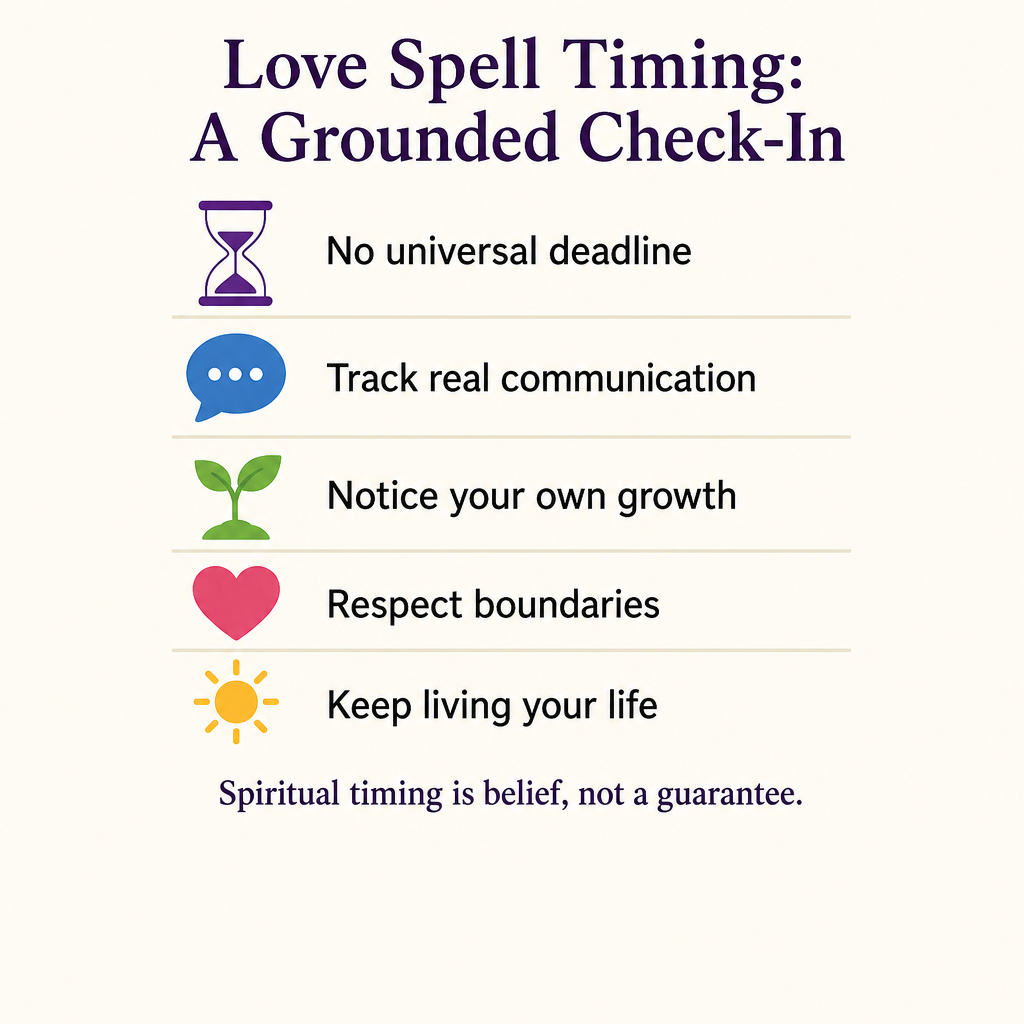
Love Spell Timing: A Grounded Check-In infographic

How Different Intentions Change What “Results” Mean

Attraction

A healthy attraction intention is less about making one specific person respond and more about becoming open to compatible opportunities. Results may look like greater confidence, more social activity, or clearer standards.

Self-Love

Self-love work is primarily internal. Progress may be easier to recognize because it can involve your own habits, self-respect, boundaries, and emotional recovery.

Reconciliation

Reconciliation depends on mutual willingness. A ritual cannot substitute for an apology, changed behavior, honest conversation, or consent. If you are considering reconnecting with an ex, the healthiest outcome may be reunion, closure, or simply greater clarity.

Relationship Harmony

For an existing relationship, focus on practical markers: better listening, fewer repeated conflicts, more appreciation, and shared effort. See Can Love Spells Strengthen Relationships Naturally? for a fuller guide.

Signs That Waiting Is Becoming Unhealthy

Spiritual practice should not trap you in a cycle of monitoring. Consider changing course if you are:

  • Ignoring a clear “no” or lack of response.
  • Putting work, friendships, sleep, or daily responsibilities on hold.
  • Spending money repeatedly because someone promises faster results.
  • Feeling pressured to buy stronger or more expensive rituals.
  • Interpreting every ordinary event as a message about one person.

For a practical reality-check approach, Using Common Sense for Love Spells is a useful companion.

A Simple Progress Journal

Instead of asking every day whether a ritual “worked,” try a weekly check-in. Record:

  1. Your original intention.
  2. Your mood and level of anxiety.
  3. Any real communication or relationship changes.
  4. Actions you took yourself.
  5. Whether boundaries were respected.
  6. What you learned about what you actually want.

This creates a more grounded record than relying on memory or a single coincidence.

Frequently Asked Questions

1. How long does a love spell usually take?

There is no reliable universal timeline. In spiritual traditions, some people interpret changes quickly while others notice nothing for weeks or months. Relationship outcomes also depend on ordinary factors such as mutual interest, communication, availability, and choice.

2. Can a love spell work overnight?

Some traditions contain stories about rapid results, but an overnight result should not be treated as a normal or guaranteed expectation. A sudden message or coincidence is not proof that a ritual caused it.

3. What counts as progress after a ritual?

A more useful measure is whether you are calmer, clearer about what you want, communicating better, respecting boundaries, and noticing real reciprocal changes in the relationship.

4. Do moon phases make a spell work faster?

Some practitioners attach symbolic meaning to moon phases, but there is no established evidence that a lunar phase determines whether a relationship outcome will occur or how fast it will happen.

5. Should I repeat the ritual if nothing happens?

Repeating a ritual immediately can feed anxiety. Many practitioners prefer to give one intention time, reflect on what is happening in real life, and only revisit the practice if it still feels meaningful.

6. Can anxiety make results harder to interpret?

Yes. Constant checking can make ordinary events feel unusually important. Keeping a simple journal and reviewing patterns over time can help separate a one-off coincidence from a meaningful change in your own behavior or relationship.

7. Is an unexpected text a sign the spell worked?

It may feel meaningful, but one message cannot establish cause. Pay attention to the quality and consistency of communication rather than treating a single contact as proof.

8. What if my desired person does not respond?

A lack of response should be respected. Spiritual practice should never be used as a reason to ignore another person’s boundaries or continue unwanted contact.

9. Do different love-spell types have different timelines?

Practitioners may describe them differently, but there is no verified timing chart. A self-love ritual, for example, is mostly about your own reflection, while reconciliation depends on two people’s choices.

10. Can personal growth be the main result?

Yes. Many believers consider increased confidence, emotional healing, clearer boundaries, and better decision-making meaningful outcomes even when a specific romantic outcome does not occur.

11. Should I stop living my normal life while waiting?

No. Continue friendships, hobbies, work, dating when appropriate, and ordinary relationship communication. A ritual should not become a reason to put your life on hold.

12. How long should I journal after a ritual?

There is no required period. A few weeks can be enough to notice whether your mood, behavior, communication, or expectations are changing without obsessively checking every day.

13. Can timing depend on another person’s feelings?

Any real relationship outcome necessarily depends on the other person’s interests, circumstances, and decisions. Mutual choice matters more than any claimed ritual timetable.

14. What if I feel worse after waiting for results?

Shift attention away from the ritual and toward grounding activities, supportive people, and practical decisions. If the process is increasing distress or compulsive checking, it is reasonable to stop.

15. What is the healthiest question to ask about timing?

Instead of asking when a specific person will act, ask whether your spiritual practice is helping you become clearer, kinder, more confident, and more open to a mutually chosen relationship.

Final Thoughts on Love-Spell Timing

There is no dependable number of days that applies to love spells. Believers may use timing, moon phases, or ritual calendars as meaningful spiritual frameworks, but relationship outcomes remain connected to real people and real choices.

The most constructive approach is patience without passivity: keep living your life, communicate respectfully, protect your boundaries, and notice whether the practice is helping you become clearer and healthier in the way you approach love.

Can Love Spells Strengthen Relationships Naturally?

Mature couple sharing a relationship ritual on an outdoor patio

Love-spell traditions are not only about attracting a new partner or reconnecting with an ex. Some rituals are intended for couples who are already together and want to focus on trust, appreciation, communication, or renewed closeness.

Relationship harmony rituals are spiritual or symbolic practices, not scientifically proven ways to repair a relationship. They work best as a meaningful structure for reflection and shared intention alongside honest communication, consent, and everyday effort.

What Relationship Harmony Spells Focus On

Rather than trying to change a partner’s personality or force affection, harmony-focused practices usually center on qualities both people want to strengthen.

  • Trust and reliability.
  • Open communication.
  • Patience during conflict.
  • Emotional safety.
  • Gratitude and affection.
  • Shared commitment.

This is similar to the intent behind a respectful binding ritual when the emphasis is on an existing mutual bond rather than control. Another related guide is White Magic and Fixing Relationships.

Why Shared Intention Matters

A relationship ritual becomes more constructive when both partners know what they are working toward. One person may want more affection while the other wants less conflict. Naming the shared goal can turn a vague wish for “stronger love” into something practical.

Examples of shared intentions include: “We want to listen without interrupting,” “We want to make more time for each other,” or “We want to rebuild trust through consistent actions.”

Simple Relationship Rituals Couples Can Share

Gratitude candle reflection

Light a candle safely and take turns naming one thing you appreciate about the other person. The candle is symbolic; the useful part is the intentional exchange of appreciation.

Intention letters

Each partner writes a short note describing what they hope the relationship feels like over the next few months. Compare the themes and choose one shared goal.

Shared walk

Take a phone-free walk and discuss one hope, one challenge, and one thing you are grateful for in the relationship.

Thirty-day gratitude journal

Each person writes one specific appreciation every day. Specific observations such as “You checked in when I was stressed” are more useful than repeating a general phrase.

Spiritual Practice Plus Everyday Behavior

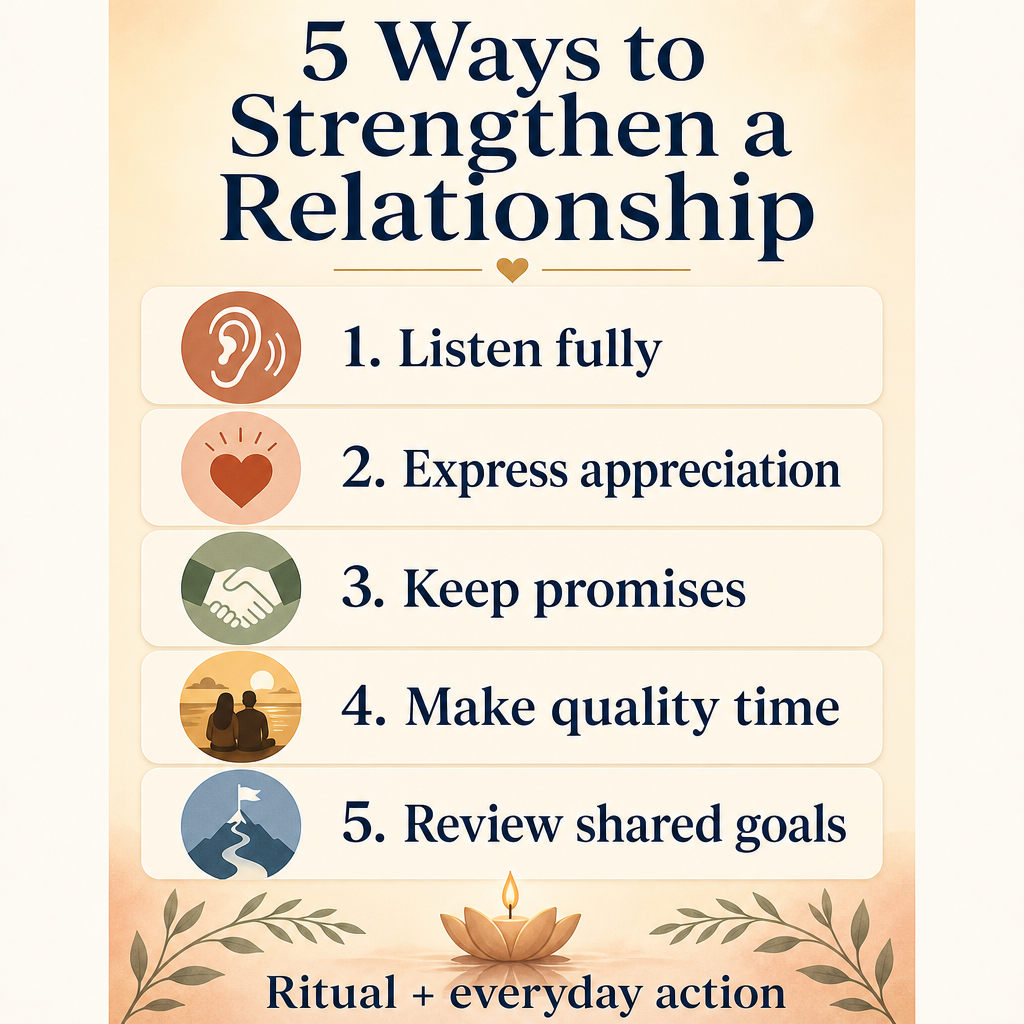
A ritual cannot replace the actions that make relationships safer and more satisfying. If the intention is trust, keep promises. If the intention is communication, listen and speak honestly. If the intention is closeness, create regular time together.

  • Listen without preparing your rebuttal.
  • Repair misunderstandings instead of keeping score.
  • Show appreciation in ordinary moments.
  • Respect each other’s boundaries and independence.
  • Discuss shared plans instead of assuming agreement.
Infographic with five practical ways to strengthen a relationship

What a Relationship Spell Cannot Do

A harmony ritual cannot make an unwilling partner participate, erase serious incompatibility, or make harmful behavior acceptable. If one person repeatedly lies, threatens, controls, or ignores boundaries, the priority should be safety and clear decision-making rather than a ritual intended to preserve the relationship at any cost.

A Five-Step Harmony Practice

  1. Agree on one shared relationship intention.
  2. Choose a simple symbol such as a candle, flower, or written note.
  3. Each person says what the intention means in practical terms.
  4. Choose one action each partner will take during the next week.
  5. Review what changed and decide what needs continued attention.

Signs of Meaningful Progress

Instead of looking only for spiritual signs, notice patterns in the relationship itself. More respectful conversations, greater reliability, easier repair after disagreements, more laughter, increased appreciation, and stronger teamwork are practical signs that the relationship is moving in a healthier direction.

When a Ritual Is Especially Meaningful

Couples sometimes use symbolic rituals around anniversaries, moving in together, marriage, renewing vows, recovering from a stressful period, or starting a new life chapter. The date itself is less important than the shared intention and willingness to follow through.

Frequently Asked Questions

1. Can couples perform relationship love spells together?

Yes. Many believers find a shared ritual more meaningful because both partners can name the intention and participate willingly.

2. Are harmony spells different from attraction spells?

Yes. Harmony rituals focus on an existing relationship, while attraction rituals are generally associated with openness to new romantic opportunities.

3. Can a ritual replace communication?

No. Communication, trust, boundaries, and consistent behavior are still necessary for a healthy relationship.

4. When is a good time for a relationship ritual?

Anniversaries, milestones, stressful transitions, or any quiet time when both partners want to reconnect can be meaningful.

5. Do both partners have to share the same spiritual beliefs?

No, but both should be comfortable with the activity and agree on the practical relationship intention.

6. Can a love spell fix recurring arguments?

A ritual may create space for reflection, but recurring conflicts usually require different communication habits and attention to the underlying issue.

7. Are gratitude rituals considered love spells?

Some practitioners see them that way, while others view them simply as spiritual or relationship practices. Either way, the focus is appreciation.

8. Do we need candles or crystals?

No. Symbolic tools are optional. A conversation, journal, shared walk, or written intention can be enough.

9. Can a relationship ritual rebuild trust?

It can symbolize a commitment to rebuild trust, but trust itself returns through honesty, reliability, accountability, and time.

10. What if only one partner wants to continue the relationship?

A ritual cannot create mutual commitment. Both people must freely choose whether to continue.

11. Are anniversary rituals useful?

They can provide a meaningful time to appreciate the relationship, review shared goals, and renew commitments.

12. Can beginners try harmony rituals?

Yes. Simple gratitude, journaling, meditation, or intention-setting practices are accessible to beginners.

13. What are healthy signs of progress?

Look for better communication, more reliable behavior, respectful conflict repair, appreciation, teamwork, and mutual affection.

14. Can a ritual help during a stressful period?

It may create a calm moment to reconnect and clarify priorities, but practical stressors still need practical solutions.

15. What is the best intention for an existing relationship?

Choose a specific shared quality such as trust, communication, gratitude, patience, closeness, or teamwork rather than trying to control a partner.

Final Thoughts

Relationship love spells are most constructive when they serve as shared reminders to care for a bond that already exists. A ritual can create a meaningful pause for gratitude or intention, but the relationship grows through what both partners do afterward: communicate, keep promises, repair conflict, and continue choosing each other freely.

Can Love Spells Bring an Ex Back? A Spiritual Guide

Woman reflecting on reconciliation with journal and smartphone

After a breakup, it is common to replay unfinished conversations, shared memories, and the possibility of reconnecting. That is why many people become curious about reconciliation love spells. In many spiritual traditions, these rituals are framed as practices for healing and renewed communication rather than a way to force an ex to return.

Spiritual belief and real-world outcome are different things. Love spells are not scientifically established methods for changing another person’s feelings, and no ritual can guarantee reconciliation. A healthy reunion requires mutual choice.

What a Reconciliation Love Spell Is Meant to Do

Within love-spell traditions, reconciliation work is usually centered on conditions that may support a healthier conversation: forgiveness, reduced resentment, emotional clarity, compassion, and openness. The goal is not to manufacture feelings that are not there.

  • Encourage calm reflection.
  • Support forgiveness without excusing harmful behavior.
  • Clarify whether reconnecting is genuinely wanted.
  • Focus on respectful communication.
  • Leave room for either reconciliation or closure.

For a broader look at what people believe happens after spiritual work, see what happens after a love spell is cast. If your intentions have changed, the companion guide on removing or releasing a love spell may be more useful.

When Reconciliation May Be Worth Exploring

Some breakups happen because of miscommunication, temporary distance, work or family pressures, or other circumstances rather than a complete loss of care. In those situations, a ritual can be used as a private way to clarify what would need to change before a reunion would actually be healthy.

Ask what changed

Wanting someone back is not the same as being ready to rebuild. Ask what you learned, what caused the breakup, what you would do differently, and whether both people could realistically create a better pattern.

Look for mutual willingness

A message, dream, coincidence, or strong intuition is not a substitute for consent. The clearest sign that reconciliation is possible is respectful, mutual communication.

Respect space

If your ex asks for distance, honor it. Spiritual practice should never be used as a reason to pressure, repeatedly contact, monitor, or manipulate someone.

Reconciliation vs. Control

A useful ethical line is simple: focus on the relationship conditions you hope to welcome, not on controlling a named person’s thoughts. Intentions such as “May communication become honest and peaceful” or “May the healthiest outcome unfold for both of us” preserve more room for free will than “Make this person return to me.”

RelationshipSpell.com also has a practical overview of reconciliation spells and healing past relationships, which complements this question-focused guide.

When Healing Is the Better Intention

Not every relationship should be restored, especially where there has been repeated dishonesty, ongoing disrespect, emotional harm, incompatible life goals, or chronic unhappiness. In those cases, a self-love or release ritual can be more constructive than trying to reopen the relationship.

  • Choose closure when contact is unwelcome.
  • Choose boundaries when old patterns remain unchanged.
  • Choose support when the breakup is overwhelming.
  • Choose safety over spiritual interpretation if there was abuse, threats, stalking, or coercion.

A Simple Reconciliation Reflection Ritual

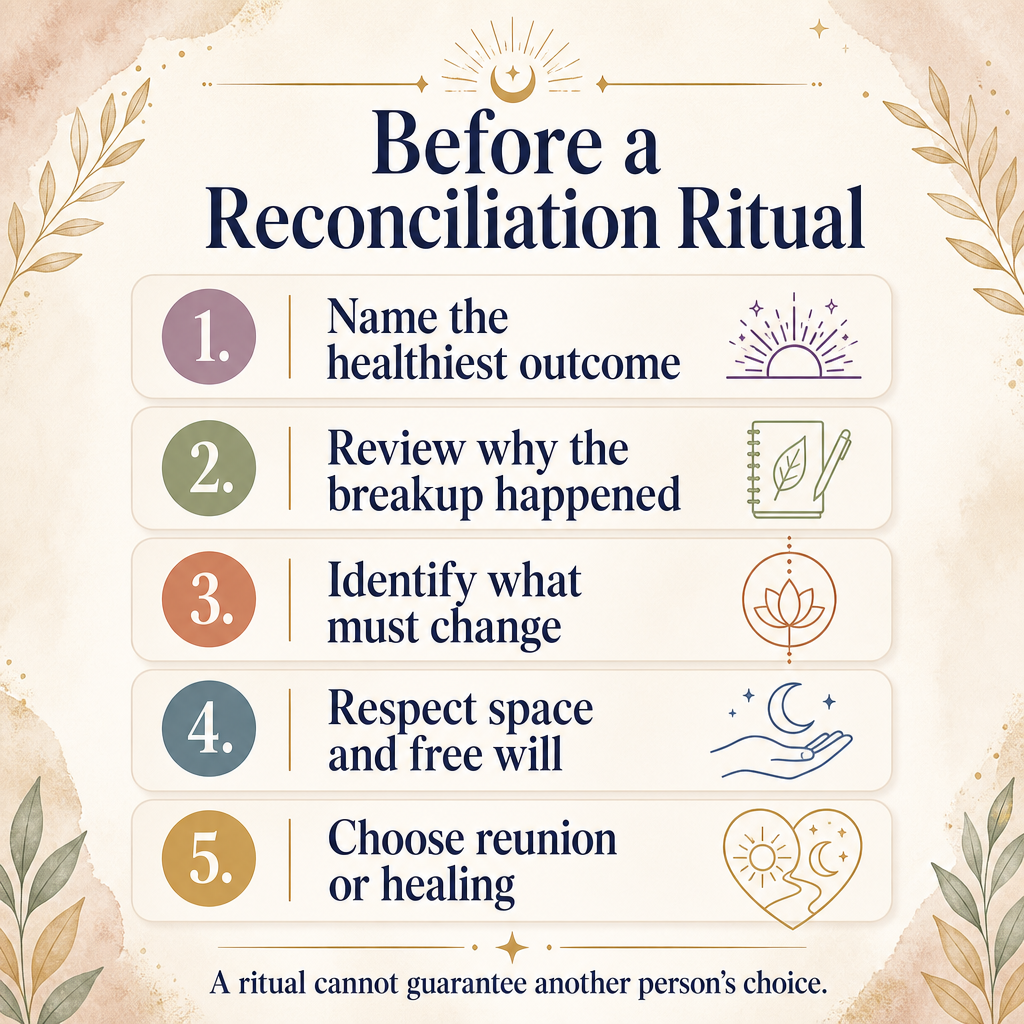
  1. Write one sentence describing the healthiest outcome you can accept.
  2. List what you miss and, separately, what was difficult in the relationship.
  3. Write three changes that would be necessary for a healthy reunion.
  4. Spend several quiet minutes breathing or meditating.
  5. Close with an intention that respects both people’s freedom to choose.

This is deliberately a reflection practice rather than a promise of supernatural control. It can help you move from desperation toward a clearer decision.

Signs to Evaluate Carefully

Believers may notice calmer feelings, greater clarity, improved communication, unexpected contact, forgiveness, or feeling emotionally lighter. Those experiences can be meaningful personally, but they should not be treated as proof that a spell caused another person’s behavior.

More useful questions are: Is communication respectful? Are old problems being addressed? Are both people choosing to reconnect? Are actions consistent over time?

Patience Without Passive Waiting

Healthy reconciliation is active. If you want another chance, work on communication, accountability, boundaries, and the issues that contributed to the breakup. Personal growth and respectful boundaries matter more than simply waiting for a result.

Infographic checklist for healthy reconciliation and free will

Frequently Asked Questions

1. Can a love spell guarantee my ex will come back?

No spiritual practice can guarantee another person’s decision. Reconciliation depends on mutual feelings, circumstances, communication, and the choices both people make.

2. What is a reconciliation love spell?

In many spiritual traditions, it is a symbolic ritual focused on healing, forgiveness, communication, and openness to a possible reunion rather than control.

3. Can a reconciliation spell override free will?

A respectful approach does not aim to override free will. Healthy reconciliation requires both people to choose the relationship willingly.

4. How long does a reconciliation spell take?

There is no reliable timetable. Believers often describe spiritual work as gradual, while real-world reconciliation can take time because trust and communication may need rebuilding.

5. What if my ex never contacts me?

That outcome may mean the relationship is not reopening. The ritual can still serve as a period of reflection, healing, and clarification about what you want next.

6. Should I contact my ex after a spell?

Only if contact is appropriate, welcome, and respectful. A ritual is not a reason to ignore a request for space or a clear boundary.

7. Can beginners perform reconciliation rituals?

Many beginners choose simple practices such as journaling, meditation, prayer, affirmations, or a candle ritual focused on clarity and healing.

8. Should I cast the same spell repeatedly?

Many traditions recommend one clear intention followed by patience and reflection instead of repeating rituals from anxiety or desperation.

9. What makes reconciliation more realistic?

Mutual interest, honest communication, accountability, changed behavior, compatible goals, and willingness to rebuild trust make reconciliation more realistic.

10. What if the breakup involved repeated disrespect?

A reunion may not be the healthiest goal. Self-love, healing, support, and strong boundaries may be more appropriate than reconciliation work.

11. Are unexpected dreams or coincidences proof the spell worked?

Believers may find them personally meaningful, but they are not objective proof that another person’s feelings or decisions have changed.

12. Can a spell fix broken trust?

A ritual may help someone focus on healing, but trust is rebuilt through consistent behavior, honesty, accountability, and time.

13. Is it better to focus on a specific ex or on the best outcome?

A broader intention such as healing, clarity, and the healthiest outcome can leave more room for mutual choice and personal growth.

14. Can reconciliation lead to a stronger relationship?

It can when both people address the reasons for the breakup, communicate differently, and make sustainable changes rather than simply resuming old patterns.

15. When should I stop pursuing reconciliation?

If the other person clearly says no, asks for no contact, or the relationship was harmful or unsafe, respect that boundary and redirect your energy toward healing.

Final Thoughts

A love spell cannot guarantee that an ex will return. In a balanced spiritual approach, reconciliation rituals are best used to focus hope, healing, clarity, and respectful communication while accepting that the other person has full freedom to choose. If a reunion happens, what makes it last will be the relationship you build afterward—not the ritual itself.

Can You Remove a Love Spell? A Complete Guide

Can You Remove a Love Spell

Love spells have been around for centuries and give hope to people
looking for healing, romance, reconciliation, or better relationships.
People often wonder what happens if their feelings change later. Many
wonder if they can remove a love spell.

Maybe you moved on from a past relationship, and your intentions have
changed, or you just want to start a new chapter in your life. No matter
what the reason is, people who believe in spiritual practices wonder if
a love spell can be released or spiritually ended.

Some practitioners feel that love spells, like any other spiritual
intentions, are connected to the purpose for which they were created
for. This means that if your intentions change, you can start a new
spiritual chapter through gratitude, reflection, emotional healing, and
symbolic rituals that represent you letting go of things in the
past.

Instead of looking at a love spell removal as something you should be
afraid of, you should see it as a peaceful process of closing one
spiritual chapter before you decide to open another.

This guide looks at how people understand love spell removal, why
some people pick it, and how spiritual traditions look at new beginnings
with respect and positivity.

Why People
Want to Know About Removing Love Spells

People often want to know about removing love spells because their
lives have changed. This means relationships grow, change, and sometimes
come to an end, and the goals that once were important are no longer
what you want today. Sometimes people ask about removing a love spell
because they:

  • Have emotionally moved on.
  • Have entered a new relationship.
  • No longer wish to reconnect with an ex.
  • Want a completely fresh beginning.
  • Feel ready for personal growth.
  • Wish to focus on self-love instead of romance.

These changes are part of natural life and are not signs that
something has gone wrong.

Can You Remove a Love Spell?

When people wonder if they can remove a love spell, the answer comes
in different ways. Modern practitioners believe that when a person
changes their intentions, they can also start a new spiritual practice
that reflects the path that they are currently on. Instead of thinking
about undoing a spell in a dramatic way, you should focus on things
like:

  • Releasing previous intentions.
  • Expressing gratitude for past lessons.
  • Letting go of emotional attachments.
  • Welcoming new opportunities.
  • Beginning a fresh chapter with positive energy.

When you look at it from this perspective, a love spell removal
becomes an act of clarity and spiritual renewal.

Spiritual Work and
Intentions

Practitioners believe that spiritual work follows intentions. If a
love spell is done so that there will be hope in a relationship, when
you change your intention, it allows your spiritual focus to change as
well.

This process is like finishing one journey before you start another.
Instead of holding on to your past, you choose to direct your thoughts
towards other things like:

  • Healing.
  • Gratitude.
  • Peace.
  • Confidence.
  • New possibilities.

By doing this, it can encourage emotional balance instead of
regret.

Why People Remove a Love
Spell

Each spiritual journey is different, and people have their own
reasons for doing things. Here are some reasons that people might want
to remove a love spell:

The Relationship is Over

When two people grow in different directions, it can be healthy to
release old intentions before starting a new chapter in life.

Personal Growth

After a long time of reflection, someone might see that they want
something different in their lives. Changing intentions is a sign of
growth and not inconsistency.

Starting a New Relationship

If someone finds a loving partner, they might decide to do a symbolic
release ritual before they focus on the new relationship.

Healing

Letting go of an old intention can create peace, and this can be
healing, which is a very strong spiritual achievement.

Setting Intentions

One thing to watch out for in love spell traditions is the importance
of setting intentions. Your intentions matter more now than your past
intentions did. Before you start any new spell or spiritual practice,
you should ask yourself these things:

  • What do I truly want now?
  • What have I learned?
  • Am I holding onto the past?
  • What kind of future am I creating?

These kinds of questions can bring clarity and honesty into your
life.

Spiritual Cleansing

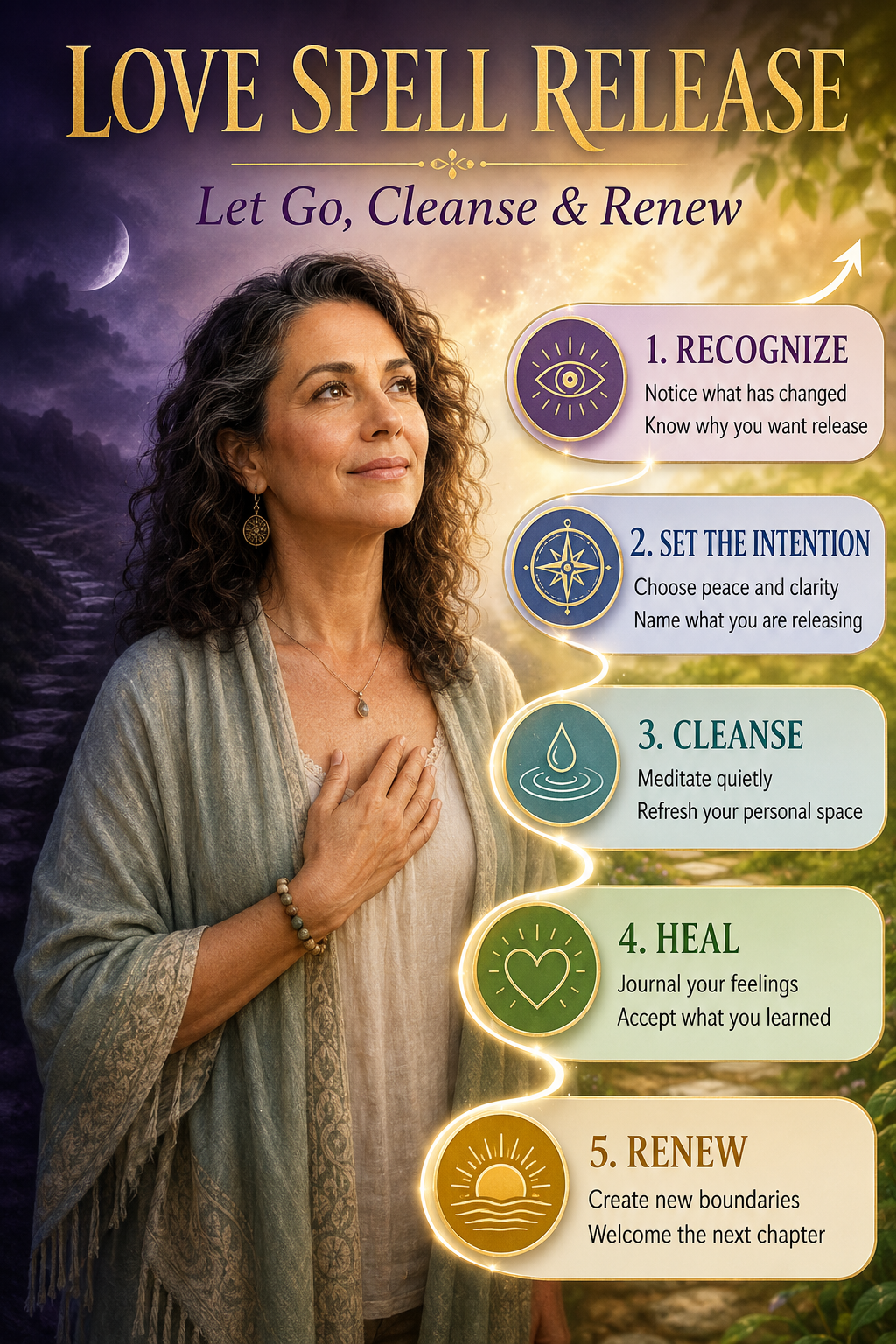
Love Spell Release: Let Go, Cleanse & Renew

In spiritual traditions, there are small rituals that can symbolize a
new start. These practices can help you let go of the past and focus on
where your journey is taking you next. Here are some examples:

Meditating

Use meditation to help quiet your thoughts, kind of let go of
emotional stress, and to bring your attention to the present. The
National Center for Complementary and Integrative Health
offers evidence-based background on meditation and mindfulness, separate from
the spiritual meaning of a release ritual.

Gratitude

By taking a few moments to appreciate the different lessons that
you’ve learned, it can help you have more peace. Gratitude encourages a
positive outlook as you move forward in your life.

Journaling

When you write about your previous intentions in the new direction
you want to take, it can be a good way to have a new beginning. Some
people find that writing down their thoughts can give them more
clarity. The American Psychological Association
also discusses how expressive writing may help people work through difficult
experiences.

Lighting a Candle

Some people light a white candle to symbolize hope, healing, clarity,
and new beginnings. The candle can be a reminder of positive intentions
that they are setting for the future. Keep it on a stable, heat-resistant
surface, away from anything flammable, and never leave it unattended.

Spend Time in Nature

Some people like going outside and taking a walk to clear their minds
and to have a new beginning. By having a peaceful space, it can make it
easier to slow down and to take time to grow. Some people think that
doing this easy program brings their spiritual intentions into peace
with where they are in their life now.

Emotional Healing After a
Love Spell

No matter how a relationship turns out, emotional healing is an
important part of the journey. Many practitioners believe taking care of
yourself allows you to move forward with greater peace and confidence.
Some helpful reminders include things like:

Be Kind to Yourself

Give yourself the same patience and understanding that you’d offer
someone you care about. Healing takes time, and it’s okay to move at
your own pace.

Practice Forgiveness

Many people feel that forgiveness creates emotional freedom. Whether
you’re forgiving yourself or someone else, letting go of resentment can
make it easier to move forward.

Accept What You’ve Learned

Each relationship teaches something valuable. Many practitioners
believe accepting both the happy times and the difficult ones can help
you continue growing emotionally.

Hold Onto Hope

Many spiritual traditions teach that every ending can become the
beginning of something new. Keeping hope in your heart allows you to
stay open to new opportunities, meaningful relationships, and brighter
days ahead.

After a Love Spell Removal

Releasing an old intention can create space for something new. This
doesn’t always mean that you’ll get another relationship right away, and
sometimes it means things like

  • Building confidence.
  • Developing new friendships.
  • Pursuing personal goals.
  • Discovering new interests.
  • Strengthening family relationships.
  • Practicing self-love.

When you’re open to new perspectives, you see that every ending is an
opportunity for something new to come along.

Personal Renewal Ritual

Try creating a simple ceremony that marks an important change in your
life. Here are some examples:

  1. Spend a few quiet minutes in meditation.
  2. Write down what you are releasing.
  3. Write down what you now welcome into your life.
  4. Express gratitude for what you have learned.
  5. End with a positive affirmation about your future.

Doing this small practice can be a meaningful reminder that spiritual
growth happens all throughout your entire life.

Common
Misunderstandings About Removing Love Spells

Here are some common misunderstandings about removing love
spells:

Myth: Removing
a Love Spell Is Something to Fear

Many practitioners believe that releasing a love spell is a peaceful
spiritual process that’s centered on healing, reflection, and setting a
new intention. For many believers, it’s simply a way of closing one
chapter and beginning another.

Myth: You
Have to Hold onto the Same Intention Forever

Many spiritual traditions teach that people naturally grow and change
throughout life. As your experiences and goals change, many
practitioners believe it’s perfectly normal for your spiritual
intentions to change as well.

Myth:
Letting Go Means the Relationship Was a Failure

Many believers feel that every relationship teaches valuable lessons,
even if it doesn’t last forever. Personal growth, healing, and new
experiences are often viewed as meaningful outcomes of the journey.

Myth: One
Ritual Is the End of Your Spiritual Journey

Most practitioners believe spiritual growth continues throughout
their life. Many people continue learning, reflecting, healing, and
growing long after a ritual has been completed.

Supporting Your Journey

If you’re starting a new journey or ending your journey where you’re
at, some people think that you should try some healthy daily habits.
Some good ideas include things like:

  • Gratitude journaling.
  • Meditation.
  • Positive affirmations.
  • Spending time in nature.
  • Practicing kindness.
  • Maintaining healthy relationships.
  • Continuing personal growth.

These kinds of habits support emotional well-being no matter what
your current relationship status is.

Frequently Asked Questions

Here are some frequently asked questions:

Can you remove a love spell?

Many practitioners believe that if your intentions have changed, a
symbolic release or renewal ritual can represent a fresh spiritual
beginning. For many believers, it’s less about “undoing” a spell and
more about setting a new intention.

Why would someone
want to remove a love spell?

People choose to move in a different direction for many reasons. Some
may be healing after a relationship, entering a new one, experiencing
personal growth, or simply feeling ready for a fresh start.

Does removing a
love spell mean it didn’t work?

Not at all. Many practitioners believe changing your intentions is
often a sign of personal growth instead of failure. As people change,
their spiritual goals can change too.

Can a spiritual cleansing
ritual help?

Many believers include practices like meditation, journaling,
gratitude, affirmations, or simple candle rituals to symbolize emotional
healing, renewal, and a positive new beginning.

Should I perform
another love spell right away?

Many practitioners recommend giving yourself time to reflect before
beginning another spiritual practice. Taking time to understand your
feelings can help you approach your next intention with greater
clarity.

Can beginners perform a
release ritual?

Yes. Many beginners start with simple spiritual practices such as
meditation, gratitude, affirmations, prayer, or journaling. These gentle
rituals are often viewed as meaningful ways to support healing and
personal growth.

Final Thoughts: Can You
Remove a Spell?

People often wonder if they can remove a spell, and the answer is
yes, but not the way that people think they can. Instead of looking at
the removal as reversing something dramatic, people often understand it
as a peaceful process of releasing an old intention and entering a new
stage in their lives.

Love spells should be seen as hope, healing, and personal intention.
As people grow, their hopes and dreams can change. Deciding to let go of
one intention and inviting another one into your life can be a sign of
emotional maturity and spiritual growth.

If you’re moving on from a past relationship, celebrating a new
beginning, or just seeking inner peace, spiritual traditions encourage
you to look at the future with compassion, confidence, and gratitude.
Each ending has the chance to become the beginning of something
better.

What Happens After a Love Spell Is Cast?

What Happens After a Love Spell Is Cast

Performing a love spell can be an important time in a person’s spiritual journey. If the goal is to get a new relationship, strengthen an existing partnership, heal after a breakup, or reconnect with someone from the past, some might wonder what happens when the ritual is completed.

They might wonder things like if there will be immediate changes, if there will be obvious signs, or if another spell should be performed with it. These are some common questions that are asked by many people who believe in love spells.

There are many spiritual traditions that say that after a love spell, there is normally just a slow change instead of a dramatic change. Practitioners often talk about the days and weeks that follow the ritual as a time of emotional alignment, personal growth, and openness to new opportunities.

Instead of just focusing on the external results, some people say to pay attention to the changes that are happening inside of yourself, your relationships, and the way that new possibilities start to happen.

This guide will look at what some practitioners think happens after a love spell and how to look at the experiences with gratitude, patience, and realistic expectations.

What Happens After a Love Spell?

What Happens After a Love Spell Is Cast

Each spiritual tradition has its own ideas behind love spells, but many believe that the ritual is just the beginning of the journey and isn’t the end. Instead of just expecting there to be instant changes, some practitioners think that a love spell creates a time of focused intentions that work well after the ceremony is ended.

This is a time that encourages things like:

  • Greater emotional awareness.
  • Personal reflection.
  • Positive thinking.
  • Emotional healing.
  • Stronger confidence.
  • Openness to meaningful relationships.

For some people, these kinds of changes can create a foundation for better relationship experiences in the future.

The Change Begins with You

One of the most overlooked things when it comes to love spell traditions is that the earliest results are more personal than external. Some practitioners talk about noticing things like:

  • Increased emotional calm.
  • Greater confidence.
  • Reduced anxiety.
  • A stronger sense of hope.
  • Improved self-esteem.
  • More optimism about the future.

These emotional changes might seem small at first, but some think that they are important signs that positive spiritual work has started. Instead of immediately seeing changes around you, the rituals can help to change the way that you experience them.

Emotions and Love Spells

Some people talk about the times after a love spell as a time of emotional growth. This can include things like:

More Clarity

You might start to feel that your relationship is more honest, and this can lead to renewal, but other times it even brings healing in areas that are needed.

Increased Patience

Some people say that they get less focused on immediate results and focus more on trusting the process.

Better Confidence

People sometimes are more willing to speak honestly or to meet new people after they perform a spell.

Emotional Healing

Emotional healing happens, and old disappointments lose their intensity. Some practitioners look at this as a step towards welcoming healthier love.

How Relationships Might Change

As personal growth keeps moving forward, people sometimes see positive changes in their relationships, such as:

  • More frequent conversations.
  • Better communication.
  • Increased affection.
  • Less conflict.
  • Better emotional openness.
  • Shared laughter.
  • More appreciation.
  • Wanting to spend time together.

These changes can happen naturally instead of dramatically, and some believe that you have to trust the gradual process.

Why Patience Is Important

Patience appears in almost every spiritual tradition, and some believe that love spells are like planting seeds. After you plant a seed, you water the soil, give it sun, and allow it to grow at its own pace.

You don’t dig up the seed to look at it, and this is why practitioners recommend that you don’t worry constantly about whether the spell is working. They encourage people to trust their intention while living a positive life.

Signs to Watch For

People sometimes ask what signs show that a love spell might be working. This can be different for everyone, but some common signs include:

Emotional Peace

People talk about feeling calmer and being less overwhelmed.

Meaningful Dreams

Some people have dreams that give them comfort.

Stronger Intuition

Some feel more certain about their relationship and don’t need constant reassurance.

Positive Coincidences

Unexpected things start happening, or opportunities come that are meaningful.

Greater Confidence

Some feel more comfortable expressing their feelings and thoughts.

Better Communication

Relationships get healthier with better communication.

Supporting the Energy After a Love Spell

A lot of practitioners believe that spiritual work does not end once the spell is finished. The energy can continue through the choices you make every day. Helpful habits might include gratitude, meditation, journaling, self-care, and healthy relationships.

  • Gratitude can help you focus on the good things that are already happening in your life.
  • Meditation gives you quiet time to feel calm, focused, and connected to your intention.
  • Journaling can help you notice dreams, emotions, signs, and small changes that might happen as time goes on.

Healthy relationships also matter. Practicing kindness, honesty, forgiveness, and patience can support the love energy you are trying to welcome.

Self-care is important too. When you take care of your emotional and physical well-being, you create a stronger foundation for love.

What to Avoid After Performing a Love Spell

Many experienced practitioners suggest avoiding habits that create stress or emotional pressure. One thing to avoid is constantly checking for results. Asking over and over if the spell is working can create anxiety instead of peace.

It may also be helpful to avoid doing several spells too quickly. Many traditions encourage giving one clear intention time to grow before starting another ritual.

One other thing that you should avoid is focusing on only one exact outcome. Sometimes spiritual work leads people toward unexpected blessings.

It’s important to stay open-minded because it can make new possibilities more noticeable. It’s also important not to ignore personal growth. Love spells are often believed to work best alongside real-life effort, such as better communication, confidence, patience, and healthier relationship habits.

When Outcomes Are Different Than Expected

Not every love spell leads exactly where someone first imagined, and some people think that unexpected outcomes still mean something. Someone wanting romance, for example, might discover greater self-love, confidence, or emotional healing.

Someone hoping for reconciliation might eventually meet a new person who is a better match for their life.

Spiritual growth can also improve friendships, family connections, and the way someone relates to others in general. Many believers see these changes as guidance instead of disappointment.

Creating a Positive Spiritual Routine

One way to keep your intention alive is to create a simple spiritual routine.

This might include:

  • Weekly gratitude journaling.
  • Monthly intention reviews.
  • Full moon reflection.
  • Daily affirmations.
  • Quiet meditation.
  • Acts of kindness.
  • Celebrating personal growth.

These small habits can help your spiritual practice feel meaningful long after the original ritual is complete.

A Different Way to Measure Success

Some practitioners think that you should look at success differently. Instead of asking, “Has the love spell worked yet?” you can ask these things:

  • Am I happier?
  • Am I more confident?
  • Have I become emotionally stronger?
  • Do I communicate better?
  • Am I more open to love?
  • Have I grown as a person?

These questions can reveal important changes that might otherwise be easy to miss.

Frequently Asked Questions

Here are some frequently asked questions:

What happens immediately after a love spell?

Many believers describe feeling calmer, more hopeful, or more emotionally focused after completing a ritual.

Should I repeat my love spell?

Practices vary, but many traditions suggest giving one intention time to unfold before repeating a ritual.

Are dreams important after a love spell?

Some practitioners believe dreams can offer personal insight, but interpretations can be different for each person.

What if nothing changes right away?

Many believers think that emotional growth can begin before visible relationship changes appear.

Can personal healing be a positive outcome?

Yes. Many practitioners consider healing one of the most valuable parts of spiritual work.

Should I keep living my normal life?

Yes. Most traditions encourage people to keep living their everyday lives while staying open to positive opportunities.

Final Thoughts: What Happens After a Love Spell

For some people, the journey starts after the ritual ends. Instead of just expecting things to change immediately, some practitioners talk about it being a gradual process of emotional healing, increased confidence, more intuition, and meaningful opportunities that happen over time.

Love spells are often looked at as a spiritual practice that can encourage people to be more open, balanced, and compassionate. These changes can create healthy foundations and help to create lasting relationships with your partner or with someone new.

Love spells should be looked at with gratitude, patience, and realistic expectations. A love spell can be one of the best parts of a spiritual experience. Some practitioners believe that as your heart becomes aligned with your intentions, love opens more space to come into your life naturally.

Before a Psychic Reading: A Calm Routine, Questions and Boundaries

The Psychic’s Pre-Reading Ritual

A favourite song, a clear table and one honest question can make the beginning of a psychic reading feel more personal. If ritual matters to you, those small choices can mark the moment when you set everyday distractions aside and turn towards something you want to understand.

You do not need an elaborate ceremony. Build a routine around what helps you feel present, then give just as much attention to the questions, time and boundaries you bring into the conversation. Candles and crystals can be meaningful symbols; your choices about the session still belong to you.

Start with three decisions

1. Your topic

Choose the relationship, transition or personal question you most want to explore. Put it into one plain sentence.

2. Your limits

Decide how much time and money you want to use, and which details you prefer to keep private.

3. Your setting

Choose a comfortable place where you can hear, take notes and end the session when you need to.

For example, “I want to understand what I need from a relationship” gives you a different starting point from “Tell me exactly what another person will do.” The first leaves room for your own values, observations and decisions.

A simple pre-reading routine

  1. Make a small space. Clear enough room for your notes and drink, charge your device if you need it and reduce interruptions. You do not have to clean the whole room.
  2. Choose an intention. Try “I want to listen carefully and ask clear questions” or “I want to explore this change without rushing.” An intention describes how you want to take part; it is not a promised outcome.
  3. Add one optional symbol. Use a candle, a crystal, a meaningful object or a moment of quiet. If none feels right, leave this step out.
  4. Check the practical details. Confirm the format, quoted price, session length and how to stop. Keep your first question where you can see it.
  5. Begin in your own words. You might say, “My main topic is this relationship. I have fifteen minutes, and I would like to understand how you work before we begin.”

The ritual flow below offers familiar spiritual options. Treat it as a menu you can adapt: a tidy table or quiet bell can replace smoke, a flameless light can replace a candle, and a visualised boundary can remind you of the limits you have chosen.

Before a Reading: Step-by-Step Ritual Flow

Candles: choose atmosphere without making them a requirement

If a candle is part of your practice, choose its colour for the association it brings to you. White might suggest a fresh start, pink a gentle approach and purple reflection. Our candle colour guide and free suggestion tool explores those choices without turning them into predictions.

Place any lit candle in a suitable holder on a stable surface, away from things that can burn. Keep it attended and put it out before leaving. The National Candle Association’s candle guidance also explains why you should let wax cool before moving the candle. A flameless candle is a useful choice when your attention will be on a phone, screen or notebook.

There is no need to watch the flame for signs while listening to the reader. If you want a separate candle practice, the beginner candle guide offers a preparation check and a simple approach.

Music: make listening easy

A familiar instrumental track may help mark the start of your routine. Silence may suit you better. Choose by comfort, rather than by claims that a particular frequency will activate a gift or make a prediction more reliable.

For a phone or video reading, turn music down before the conversation. Test whether you can hear clearly and whether the other person can hear you. If music competes with the discussion, switch it off. For a written reading, you can use a quiet playlist while preparing questions and return to silence when reading the reply.

Protection symbols and personal boundaries

Visualising a circle of light, holding a crystal or placing a familiar object nearby can be part of a spiritual routine. You can use the image below to compare symbolic practices that appeal to you. Choose for personal meaning, without assuming that an object can guarantee protection or control what happens.

Energetic Protection Methods Compared

Give the symbol a practical meaning

If you picture a boundary around your space, pair it with a sentence you can use: “I would rather not discuss that,” “Please explain what you mean,” or “I am ready to stop now.” You can keep your spiritual practice and exercise those choices at the same time.

Be cautious if someone says a frightening result can only be avoided by paying immediately for another ritual. Pause before sending more money or personal information. The FTC’s guidance on avoiding scams explains pressure tactics and encourages talking with someone you trust before acting.

Prepare questions you can work with

Write two or three questions and put the most useful first. Open questions invite explanation. You can then ask a specific follow-up when an answer is unclear.

  • Love: “What patterns should I reflect on in the way I approach relationships?” Follow up with “What would that look like in an ordinary conversation?”
  • A transition: “What do I want to understand before choosing my next direction?” Follow up with “Which part is a symbolic impression, and which part is a suggestion I can assess?”
  • Your own intuition: “How can I make more space to notice my feelings?” Follow up with “What could I record and revisit for myself?”

For more relationship prompts, see questions to ask about love. You can ask about a reader’s process and decide how much background to offer. You do not have to agree with an interpretation that does not fit your experience.

Free per-minute session cost estimator

Use the price actually quoted to you. This calculator multiplies your planned minutes by that rate and adds a known one-time fee. It does not supply a provider’s price, convert currencies or estimate taxes. For a flat-price package, check the package terms instead.

Leave the rate empty if you do not know it. Use zero for the fee only if no one-time fee was quoted; confirm any unknown charges first.

Close the session with room to think

Keep an eye on the time you agreed. You can say, “I have time for one last question,” or “Thank you, I want to stop here.” Check the service’s billing terms before booking so you understand how an early ending is handled.

Afterwards, make three short notes: what was said, what you felt and what you want to explore next. Keep an interpretation separate from events that happen later. A useful next step might be preparing a conversation, checking information or giving yourself a day to think. You do not need to make a major decision while the session is still fresh.

Questions about preparing for a psychic reading

1. What should I do before a psychic reading?

Choose one main topic, write two or three questions and confirm the session format, length and price. Then make your space comfortable. A short personal ritual is optional; you can have a reading without candles, music or special objects.

2. Do I need a candle for a reading?

No. A candle can be a personal symbol of attention or intention, but it is not a requirement. A flameless candle, a meaningful object or a quiet moment can serve as a focus without an open flame.

3. Which candle colour works best?

Choose a colour that reminds you of the quality you want to bring to the conversation. White might suggest clarity, pink warmth and purple reflection. These are symbolic choices, not a way to make a reading more accurate.

4. What music should I play?

Choose something you find comfortable, or choose silence. For a call or video session, keep music low enough to hear both people clearly. If lyrics distract you, an instrumental track may be easier to leave in the background.

5. Must I use sage or incense?

No. You can tidy the table, open the curtains, sound a quiet bell or simply pause. Smoke is not necessary for a meaningful beginning. Choose a setup that works for the people, pets and shared space around you.

6. What does energetic protection mean here?

Some people use a visualised boundary, a crystal or another spiritual symbol to mark personal space. In this guide, pair that symbol with clear choices: what you want to discuss, what you prefer to keep private and when you will end the session. A symbol does not guarantee protection from harm.

7. How many questions should I prepare?

Start with one main topic and two or three questions. You may not get through every question in the time you choose. Put the most useful one first and leave room to ask what an unclear statement means.

8. Should I tell the reader everything beforehand?

You can ask how the reader normally begins and decide how much context you want to offer. You do not have to disclose private details to make the session worthwhile. Never share passwords, verification codes or payment-account access.

9. How do I estimate a per-minute session cost?

Multiply the quoted price per minute by the number of minutes you plan to use, then add any known one-time fee. Use one currency throughout. The calculator in this guide shows that estimate; confirm taxes, minimum charges and any other fees with the service before paying.

10. What if the session has a flat price?

Use the quoted flat price and confirm what it includes. The calculator here is for per-minute quotes, so it should not replace the terms of a flat-price package. Ask about the length, any extra charges and what happens if you end early.

11. Can I record the reading?

Ask the reader and service about permission and their recording policy before starting. If a recording is not agreed, ask whether taking notes is welcome. You can also write down your own impressions after the session.

12. What can I say if I do not understand something?

Try: Could you explain what you mean by that? You can also ask whether a statement is an impression, a symbolic interpretation or a practical suggestion. You do not have to agree with something simply because it was said confidently.

13. Can I stop a reading early?

Yes, you can say that you want to stop the conversation. Before booking, check how the service bills time and handles an early ending. If you feel pressured to pay for an urgent additional ritual, pause and discuss the situation with someone you trust.

14. What if I feel no special energy during the routine?

You can still continue, shorten the routine or leave it out. You do not need to produce a particular feeling or perform the steps perfectly. The useful question is whether your setup helps you arrive with clear questions and comfortable boundaries.

15. What should I do after the reading?

Write down what was actually said, what it brought up for you and what you still want to think about. Keep those notes separate from later events. Choose an ordinary next step you can assess for yourself, and give yourself time before making a major decision.

Kim Kardashian, Psychics and Business: What Her Public Comments Tell Us

Why Kim Kardashian Consults Psychics

A celebrity’s interest in psychics can make a private spiritual practice feel more familiar. It can also raise a bigger question: if someone appears successful, did a reading help create that success? With Kim Kardashian, it is useful to keep her public comments, other people’s interpretations and claims about business results separate.

You can be curious about her story and still choose your own relationship with readings. The most useful takeaway is a way to think about reassurance, intuition and decisions in your own life.

The question behind the headline: A person can value spiritual guidance without every professional achievement being evidence that a psychic predicted or produced it.

What Kim Kardashian has said publicly

In Sean Manning’s November 2023 GQ profile, Kardashian described consulting psychics and mediums for reassurance. She said she kept notes and later revisited them, believing some things had happened as described. These are her accounts of her experience.

In November 2025, The Independent reported her criticism of psychics after an incorrect exam prediction.

Those dated accounts allow room for both enthusiasm and disappointment. Neither gives us access to her current private consultations, a complete record of predictions or the reasoning behind every business decision.

Where the business-strategy story goes too far

Reading a celebrity interview and noticing that the person also runs businesses does not establish a link between the two. To say that a psychic selected a launch date, shaped a product or caused a financial result would require evidence about that particular decision.

The public comments above do not establish those claims. Describing psychics as the hidden engine of a business turns an interesting personal account into a much larger story than the evidence supports.

For a reader who enjoys spiritual guidance, this distinction is useful. You do not have to prove that a reading creates wealth to find a conversation meaningful. It might help you express a worry, notice a preference or feel ready to ask a question you have been avoiding. Those are different outcomes from a verified prediction.

Three layers to keep separate

1. The public account

What did the person actually say, and when? Keep their words connected to the interview or event.

2. The interpretation

What meaning did they, a journalist or a reader give it? An interpretation can matter without becoming an established fact.

3. Your next decision

What can you explore or check for yourself? A celebrity’s story does not decide what you should buy or believe.

What this can mean for your own readings

Perhaps the appealing part of a celebrity story is the permission to be spiritual while also being ambitious. You can make room for both. The key is to give each part a clear job.

Let reflection clarify the question

If you are considering a new project, a reading might become a conversation about confidence or identity. Instead of asking only whether it will succeed, try asking what you hope success will change. Wanting creative freedom is different from wanting approval, and either answer may help you understand your next step.

For example, imagine you want to open a small online shop. A card reading brings up independence. You could use that theme to ask whether the shop’s schedule would actually give you more freedom. You can then check the time involved in orders, customer messages and delivery. The symbol starts a question; your practical checks help answer it.

Keep reassurance separate from certainty

Reassurance can be welcome when you feel torn. But feeling calmer does not make a promised event certain. Notice whether a reading leaves you with more room to choose or makes you feel that you must follow one exact path.

You are allowed to say, “That is interesting, but I want to think about it.” You can also leave a question unanswered. A worthwhile spiritual conversation should leave space for your own judgment.

Review the whole record

If you want to look back at a prediction, record its wording before the outcome. Include any time window and details that would make it specific. Later, make separate notes for what matched, what did not and what remains unclear. Avoid quietly rewriting an old statement to fit a new event.

This is a personal reflection habit, not a score for psychic ability. Some statements are too broad to assess. Writing “unclear” is more honest and more useful than forcing every message into a hit or a miss.

Using Psychic Insight with Brand Identity

Turn a celebrity story into your own reflection

Use this free guide to find a question and a practical next step. It does not rate a psychic, predict an outcome or tell you whether to book a reading. Select what interests you and how you would like to explore it.


Choose both options to see a suggested question and next step.

Your selections stay on this page. This guide asks for no names, birth details, money amounts or contact information.

You can use the guide without JavaScript: name what attracts you to the story, write one question about your own life and choose one action you can control. Keep a prediction separate from that action.

If you decide to book a reading

Choose for your own needs rather than a famous client’s name. Look for an explanation of the reader’s approach, understandable pricing and room to ask questions. A celebrity association alone tells you little about whether you will feel heard.

Before a session, decide which topic you want to discuss and what you would prefer to keep private. Our guide to a calm pre-reading routine, questions and boundaries can help you prepare without making the ritual complicated.

You can enjoy a celebrity’s spiritual story without borrowing their expectations. Let curiosity lead to a question you can use, and let your own circumstances shape the answer you act on.

Frequently asked questions

1. Why might someone with a successful career still want a psychic reading?

A career does not remove uncertainty, longing or the wish to feel understood. A person may value a reading as a spiritual conversation or a space to consider feelings. Those personal reasons do not establish that a reading caused their professional success.

2. Does a celebrity's experience tell me which psychic to choose?

It can introduce you to a name, but it does not establish your likely experience. Consider the reader's stated approach, clear pricing, boundaries and willingness to accept questions. You do not need to pay a celebrity-level price to explore your own concerns.

3. Can psychic insight be part of business planning?

You can use a reading to explore your feelings about a project or the values you want it to express. Keep decisions about costs, timing, contracts and demand tied to evidence you can check. A symbolic message is not a substitute for a practical plan.

4. What is the difference between a useful insight and a prediction?

A useful insight may help you name a need or see another choice. A prediction makes a claim about an event that may or may not happen. Ask what was actually said and what would count as a different outcome.

5. How can I review a prediction fairly?

Write down its original wording and any stated time window before events unfold. Later record matches, misses and unclear details separately. If the wording is too broad to check, keep it as an interpretation rather than turning it into a confirmed result.

6. What if a reading feels meaningful but a prediction is wrong?

You can appreciate a comforting conversation while acknowledging that a particular prediction did not happen. You may choose to pause readings, ask a question or move on. You do not owe another session to make an earlier prediction work.

7. What should I ask instead of whether I will become successful?

Try a question you can act on, such as: What am I hoping this project will give me? What am I avoiding? What information do I need before taking the next step? You can bring these questions to a reading or explore them in a journal.

8. Do I need to copy a celebrity's spiritual routine?

No. Choose a practice that fits your beliefs, time and comfort. A quiet reflection, a conversation or no spiritual practice at all can be a valid choice. Keep the parts that help you understand yourself without making your life imitate someone else's story.


Magical Herbs and Their Uses: Symbolism, Love and Personal Practice

Using Herbs for Living

By Willette Moore

A leaf tucked into a notebook, a rose drawn beside a wish, a plant name that reminds you of someone you love: herb symbolism can begin with a small, personal association. You do not need an overflowing cupboard or a complicated recipe to make room for that kind of practice.

This guide explores twelve plant symbols through love, renewal and boundaries. Use their names or pictures to reflect on what matters to you, then connect the intention with an action you can actually choose. Every practice can be followed with paper and a pen.

What a magical herb association can mean

A correspondence is an association: a plant may be linked with affection, remembrance, cleansing or another idea in a particular spiritual practice. Meanings can vary between communities, books and individual experiences. A familiar scent might bring one person comfort and remind another person of something quite different.

Begin with a meaning you understand. If a rose suggests kindness to you, ask what kindness would look like today. If a leaf represents a new beginning, decide what you are beginning. The symbol gives your attention a place to rest; it does not make another person choose a relationship or promise that an event will happen.

Keep symbolism and plant use separate. These are reflection prompts, not instructions for identifying, eating, burning, bathing with or applying plants. A name in a magical reference does not tell you whether a real plant or product is safe.

Love, healing and protection: make the intention specific

Love might mean listening, enjoying your own company, appreciating a friend or making room for mutual affection. It does not require directing a ritual at someone who has declined a relationship.

Healing can be a spiritual word for renewal after a difficult experience. In this guide, it means making room for reflection and support. It is not a claim that a herb treats depression, pain, fertility concerns or another health condition.

Protection can describe an intention to care for your time, privacy or boundaries. Pair the symbol with an actual choice, such as declining an unwanted request. Do not rely on a plant to prevent illness, violence, accidents or another person’s behaviour.

Twelve plant symbols and practical prompts

The following pairings offer starting points for your own notebook practice. You may choose a different meaning that fits your experience. Use a drawing or the written name rather than collecting an unfamiliar plant.

Showing 12 of 12 reference cards. Choose a prompt and draw its plant or write its name beside one action you can take.

The numbers count cards in this guide. The filter does not assess a plant, predict an outcome or save your selection.

Rose

Love and connection: Affection with room for choice

Draw a rose beside one quality you value in a relationship. Let the image remind you of the way you want to give and receive affection.

One action: Ask yourself what that quality looks like in ordinary behaviour, such as keeping a promise or listening without interruption.

Basil

Love and connection: Warmth in everyday connection

Use a basil-leaf drawing as a reminder of the small, repeated acts that make a shared space welcoming.

One action: Choose a kind action that is welcome, such as offering help with a task or asking how someone would like to spend time together.

Lavender

Love and connection: A little room to listen

Let a lavender sketch mark a pause before a conversation. Its meaning here is your intention to slow down, without a claim about a scent or treatment.

One action: Write one open question, then leave room to hear the other person’s answer instead of planning it for them.

Hibiscus

Love and connection: Enjoyment without pressure

Choose a flower image to represent delight, colour or playfulness in your own life. It need not be aimed at a particular person.

One action: Plan something you enjoy, or suggest a simple shared activity if both people want to take part.

Rosemary

Renewal and reflection: Remembering what matters

A rosemary drawing can stand for remembering a value or a lesson you want to carry forward. This is a personal symbol, not a memory remedy.

One action: Write one thing you learned and one way you would like to act differently next time.

Mint

Renewal and reflection: Making a fresh start

Let a mint-leaf sketch represent a fresh page. You can begin again without declaring that everything in the past was a mistake.

One action: Choose a small task you can finish today, such as clearing a notebook page or making time for a neglected interest.

Chamomile

Renewal and reflection: A gentler pace

Use a small flower drawing to mark an unhurried moment. You do not need tea, oil or a special sensation for the symbol to be useful.

One action: Choose an ordinary pause that suits you: read, sit somewhere comfortable or put a demanding task aside until an agreed time.

Lemon balm

Renewal and reflection: Making room for yourself

Let a leaf image remind you that your day can hold more than one concern. An unresolved relationship does not have to fill every available space.

One action: Arrange one activity or conversation that is about your own interests, rather than checking for an answer from someone else.

Sage

Boundaries and care: Naming what you want to leave behind

A written plant name can stand for a boundary around a habit or expectation. You do not need smoke or a cleansing product to mark that decision.

One action: Name the behaviour you want to stop and a practical replacement, such as closing a social app and returning to a planned task.

Bay leaf

Boundaries and care: Giving an intention a clear shape

Draw a leaf outline and write a short intention inside it. Keep the paper as a reminder of a choice you can make.

One action: Turn a broad wish into a specific limit: what will you agree to, decline or ask about? There is no need to burn the page.

Thyme

Boundaries and care: Taking time to answer

Let a thyme sketch represent the space between a request and your response. You are allowed to consider what you can comfortably offer.

One action: Practise a sentence such as: Let me think about that and get back to you. Then choose a realistic time to respond.

Calendula

Boundaries and care: Protecting something worth caring for

A bright flower image can remind you of a friendship, interest or routine you want to make room for. The image itself does not provide physical protection.

One action: Choose one practical way to support that part of your life, such as reserving time for a friend or keeping an important appointment.

A simple four-step notebook practice

  1. Choose one intention. Write a sentence about what you want to practise, such as speaking honestly or making room for a fresh start.
  2. Choose one symbol. Draw a leaf or flower, or write a plant name. Add a word explaining what it means to you.
  3. Choose one ordinary action. Keep it within your own control and respectful of other people’s choices.
  4. Close the practice. Put the page away and return to your day. You can reflect later on the action you took, without treating every coincidence as a result.

For example, you might draw rosemary beside the word remember, then write, “I want to remember that I can ask for time before agreeing.” The useful change is the boundary you practise, not a claim that the drawing controls what happens.

Before you use an actual plant or herbal product

Keep a symbolic reference separate from decisions about your body. The National Center for Complementary and Integrative Health explains that supplements can interact with medicines or pose risks in some circumstances. Products may also differ from the preparations studied. A familiar name, a natural origin or a spiritual label is not enough to judge a specific use.

Common names can be ambiguous. Do not assume that two names refer to the same plant, or that different species and plant parts are interchangeable. Ask for qualified identification and appropriate product information instead of guessing from a correspondence list.

The Poison Control plant reference identifies poisonous plants including deadly nightshade, poison hemlock, monkshood and pennyroyal. Some plants can also harm skin. Keep unknown materials away from children, and do not experiment with plants because they appear in a magical reference. The paper practices above require none of them.

If an exposure has happened, contact a poison service promptly for advice about that specific case. In the United States, call Poison Control at 1-800-222-1222; elsewhere, contact your local poison service. For an immediate life-threatening emergency, contact emergency services.

Keep a personal record without turning it into a promise

Beside the symbol, write the date, the meaning you chose and the action you planned. Later, note what you actually did and how you would change the practice. “I asked for a pause before answering” gives you something concrete to reflect on. “Every delay means the universe is testing me” can leave the intention impossible to question.

If you are learning within a particular tradition, follow that community’s guidance about its practices and meanings. You can also keep a simple personal notebook without claiming that your own associations are universal or ancient.

For help shaping a practice in your own words, see how to write a personal spell. The guide to consent and free will helps keep relationship intentions respectful. If you already have ritual materials to put away, the materials disposal guide addresses that separate task.

Frequently asked questions

1. What is a magical herb correspondence?

It is an association between a plant and an intention, symbol or spiritual idea. Associations vary between traditions and people. A correspondence does not establish a medical effect or guarantee a result.

2. Do I need actual herbs for the practices in this guide?

No. Use a drawing, a printed image or a plant name written on paper. Each prompt is a way to explore an intention and choose an ordinary action; nothing needs to be eaten, burned or applied to your skin.

3. Which herb symbol should I choose for love?

Choose an image that helps you name the quality you want to practise, such as affection, listening or shared enjoyment. The love cards offer examples. A symbol cannot supply another person’s consent or determine whom they love.

4. What does healing mean in this article?

Here it refers to personal reflection, renewal or making room for support after a difficult experience. It is not a claim that a plant treats an illness, changes a diagnosis or replaces care from a qualified professional.

5. Can a protection herb keep me physically safe?

Do not rely on a plant or symbol to prevent illness, violence, accidents or someone else’s actions. You may use an image to remind yourself of a boundary while taking practical steps appropriate to the situation.

6. Can I identify a plant from this list or its common name?

No. These names are prompts for symbolic reflection, not an identification key. Similar common names can refer to different plants. Use qualified identification and appropriate product information before handling or using an actual plant.

7. Is a plant safe because it is natural or sold for rituals?

No. Natural origin and ritual marketing do not establish safety. Some plants are poisonous, and products can have different ingredients or concentrations. Do not turn a symbolic reference into a recipe or dose.

8. Can I use these entries to make tea, oil, incense or a bath?

This guide does not provide preparation or safety instructions for those uses. A plant’s name or symbolic meaning is not enough to judge them. Use the paper practices here, and seek qualified advice for a specific product or health question.

9. What if someone has eaten an unknown or poisonous plant?

Contact a poison centre promptly for case-specific advice instead of guessing from a magical herb list. In the United States, Poison Control is available at 1-800-222-1222. Elsewhere, use your local poison service; contact emergency services for an immediate life-threatening situation.

10. What do the numbers in the free filter mean?

They count the reference cards currently shown out of the twelve cards in this guide. They do not measure plant safety, magical strength, compatibility or a chance of success. Reset shows the complete list again.


Doing Your Own Binding Spell

Doing Your Own Binding Spell

How to Safely Perform a Binding Love Spell at Home

Binding love spells are meant to gently strengthen the bond between two people who already share love and trust. They’re not about control, but they’re about supporting an emotional connection that already exists. When you set your intentions right, you can use these rituals to increase your peace and to have a partner who is closer to you.

What Is a Binding Love Spell?

A binding love spell is when two people become linked emotionally, and their energies become similar. These aren’t like attraction spells that bring someone new into your life, but they are about having a stronger connection with the person you’re with. They work perfectly with those who are in long-term relationships, and they want more closeness.

When to Use a Binding Love Spell

  • When you want to get closer to someone you’re already with.
  • You are committed to making the relationship stronger.
  • You want a better connection.
  • You feel safe with the person you’re with.
  • You trust your partner.

Important Reminder: Never use a binding spell to try and control someone or force feelings. True love has to be mutual and free.

How to Cast with Care

Before you start, it’s important to check in with yourself and the energy around you. Here’s how to make sure your spell is grounded and safe:

  • Be Honest About the Relationship – Is there love and respect already in place? A binding spell should only build on what already exists.
  • Use Kind and Ethical Magic – Avoid anything that tries to override someone’s free will.
  • Protect Your Space and Spirit – Cleanse your space with incense or a simple salt sprinkle and take a few minutes to center yourself.
  • Get Clear on Your Intentions – Know exactly what you’re asking for before you begin.

When to Cast for the Best Results

Timing can help amplify the power of your spell. Here are a few good moments to work your magic:

  • Full Moon: This is a time to strengthen your commitment and your energies.
  • Fridays: This is ruled by Venus, the planet of love and romance.
  • Evenings: A time when you feel more open to love.

How to Perform a Binding Love Spell (Step-by-Step)

This is a gentle and beginner-friendly love spell that helps deepen emotional commitment between two people who already share a loving connection. It’s not about control, it’s about care, intention, and strengthening a bond that already exists.

What You’ll Need:

  • One red candle for love.
  • One red candle for passion.
  • A piece of paper.
  • A pen.
  • A small ribbon.
  • A strand of your hair.
  • A strand of your partner’s hair.
  • Rose petals and cinnamon (optional).

Step 1: Set the Space

Find a place that is quiet where you won’t be distracted. Take time to meditate, burn some sage or sprinkle salt around the room to clear the negative energies. Light both of the red candles and make sure they are beside each other. Play some music that is soft to help you focus on loving energies.

Step 2: Speak Your Intention

On the piece of paper, write your full name and your partner’s name using the red pen. Then, write a simple affirmation like:

“Our love is strong, unbreakable, and everlasting.”

Place your hair (or symbolic items) on top of the paper.

Step 3: Bind the Connection

Fold the paper toward you, keeping your intention clear in your heart. This movement draws the energy closer. Take the ribbon or thread and tie it around the folded paper. As you tie three small knots, say:

“With this thread, our love is bound, in harmony, trust, and devotion.”

Step 4: Charge with Energy

Hold the tied paper above the flame of the candles, but don’t let it catch fire. Just let the warmth energize your intention. Close your eyes and imagine a deep, steady love wrapping around both of you. Feel it. Picture it growing stronger.

Step 5: Close and Store the Spell

When you feel ready, gently blow out the candles. Thank the energy, your spiritual guides, or the universe for holding space. Keep the tied paper somewhere special, like under your pillow, tucked in a keepsake box, or on your love altar.

Ways to Strengthen Your Binding Love Spell

If you’d like to give your love spell a little extra energy, here are a few gentle ways to boost its power:

  • Wear Rose Quartz: This heart-centered crystal helps you hold loving energy throughout the day. It’s a quiet but strong way to stay connected to the energy of the spell.
  • Speak Love Affirmations: A few kind words go a long way. Say things like, “Our love grows stronger with every sunrise,” or “I feel safe and loved in this connection.”
  • Time it with the Full Moon: The full moon naturally enhances love, attraction, and emotional depth. Doing your spell during this phase can give it an extra push.

How to Know If Your Spell Is Working

Once your spell is out in the universe, give it time to ripple. Here are some sweet signs it may already be taking root:

  • You feel an emotional connection with your partner more than ever.
  • You see that they are being warm, and you are having good communication.
  • You have vivid dreams involving your partner.
  • You keep seeing numbers like 111 or 222.

All of these things show you that the universe is ready to help you.

If It Doesn’t Seem to Be Working

Not every spell works instantly, and that’s okay. Love, like magic, often moves in its own rhythm. Here’s what to do if you feel stuck:

  • Be Patient – Spells can take time to align with the energy of your life.
  • Stay in the Flow – Keep meditating, visualizing, and holding the energy of love.
  • Try Again Later – You can repeat the spell on the next full moon when the energy is fresh.
  • Get Guidance If You Need It – There’s no shame in reaching out to a trusted spiritual guide for help.

Common Myths About Binding Spells

  • Myth: Binding spells force someone to love you.
    Truth: Real love spells never force anything; they only deepen what’s already there.
  • Myth: Love spells work overnight.
    Truth: Like any relationship, it takes time, intention, and trust in the process.
  • Myth: You can’t undo a binding spell.
    Truth: Spells can be undone or reversed, especially if done with honesty and care.

FAQs About Binding Love Spells at Home

  1. If I’m single, can I cast a binding spell?
    Binding spells are best used when there’s already a loving connection. If you’re single, it’s better to start with an attraction spell that calls in love with openness and trust.
  2. Are there special powers I need to cast this spell?
    Nope. You don’t need to be born a witch or have years of training. A calm mind, a clear intention, and faith in your energy are what matter most.
  3. How long does it take these spells to work?
    It varies. Some spells take a few days; others take a few weeks. It depends on how aligned your energy is and how ready the relationship is to grow.
  4. Are there binding spells that don’t use candles?
    Yes. Candles help set the mood and amplify energy, but they’re not required. You can focus on meditation, intention, and visualization just as powerfully.
  5. Can I change my mind after casting?
    If you feel unsure or regret it later, you can undo the spell. A simple reversal ritual or help from a spiritual guide can gently release the energy you’ve set in motion.

Final Thoughts

Binding love spells can be a gentle and heartfelt way to support love that already exists. When done with honesty, care, and respect for free will, they deepen connection and bring two hearts closer in a natural way.

What matters most is your intention. Stay grounded. Stay kind. And always listen to your inner guidance.

And if you ever feel unsure or want help along the way, there’s no shame in reaching out to someone experienced in love work. You’re never alone on your path. A full moon. A soft flame. A whisper of love carried into the night. That’s all it takes to begin.