

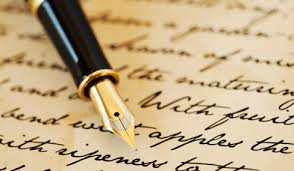
A personal spell can begin with a sentence you have been trying to say. Perhaps you want to speak more honestly, prepare for a new opportunity or mark the end of a difficult chapter. Writing the practice yourself gives you room to choose words and symbols that belong to your situation.
You do not need to make the language grand. Start with something you understand and can return to. If spellwork is meaningful in your spiritual life, the writing can become a deliberate moment of attention: this is what matters to me, this is how I will express it, and this is what I will do next.
New to the subject? The beginning witchcraft guide explains intention, ritual and source notes. This workshop takes the next step: composing one small practice in your own words.
A five-part map for your draft
Use the map as a writing aid. It is not a test of belief or a formula that obliges the world to respond. You can keep a part simple, change the order to fit your practice or leave out an object you do not need.
1. Name the purpose you can take part in
Write the wish first, even if it feels untidy. Then ask what part of it belongs to you. Wanting a relationship, a job or an apology is understandable, but those outcomes involve circumstances and other people. Your intention can describe the qualities and choices you want to bring.
- A difficult conversation: “I will explain what I need and listen to the answer.”
- A new opportunity: “I will prepare carefully and make my experience clear.”
- Moving on: “I will stop checking for a message tonight and give myself something kind to do.”
Read your sentence aloud. Does it sound like a choice you can make? Could you tell whether you had tried it? If it asks another person to feel a particular way, rewrite the part you can choose. The love spell ethics guide explores that distinction in more detail.
2. Choose a symbol you understand
A symbol works best in a personal draft when you can explain its place. A key drawing might remind you of an opening; a smooth stone might stand for the steadiness you want to practise. These are examples of personal associations, not universal instructions about what every object means.
Try the sentence: “I chose this because…” If the only answer is that a shopping list told you to buy it, pause and consider a simpler choice. A sketch, a word or a familiar item may say more to you than an unfamiliar ingredient.
When a symbol comes from a particular culture or religious tradition, learn its context before claiming it as part of your own practice. Keep the source and your personal interpretation separate in your notes. Our witchcraft symbols guide offers a starting point for that kind of study.
For this exercise, use paper and a pen. You do not need to swallow, burn, scatter or put anything on your skin. If you like candle symbolism, draw a flame or use a battery candle. The U.S. Fire Administration recommends considering flameless candles; paper and fabric should never be held above a real flame.
3. Write words you are comfortable saying
Give the intention a voice. You might write a direct statement, a short invitation or a line of poetry. Choose a style that feels sincere instead of borrowing a voice you feel obliged to perform.
“May I speak with care and leave room to listen. I can be clear without making the answer mine to choose.”
The first sentence names a quality. The second names a boundary. Neither promises that the conversation will end in agreement.
You can replace “May I” with “I choose to,” write in a language you know well or keep the words silent. Rhyme is optional. Avoid language you do not understand just because it sounds ancient, and do not assume that longer wording makes the practice stronger.
Before keeping a line, ask whether it says something you actually mean. “I am completely fearless” may feel false on a nervous day. “I can take one careful step while feeling nervous” may be easier to return to honestly.
4. Give the words a simple beginning and ending
Decide what you will actually do. A complete practice can be small: clear a place on your desk, read the intention, fold the paper beside your chosen symbol and put the materials away. The sequence marks a moment without needing a special sensation.
- Begin: Sit comfortably and look at the sentence you wrote.
- Express: Read your words, silently or aloud, and notice what they ask of you.
- Mark: Fold the note, touch the drawing or place the paper in your journal.
- Close: Put the materials away and name the next ordinary action.
Choose timing because it helps your practice fit your life. Some people give a Moon phase spiritual meaning; others use a quiet evening or a regular journaling time. The Moon phase guide explains the cycle if you want to explore that symbolism. Timing does not establish a deadline for a relationship, message or other outcome.
5. Review the practice without turning it into a verdict
Give yourself a sensible point to revisit the note: after the conversation, after preparing the application or when you next sit down with your journal. Write what you actually did before deciding what it meant.
For example: “I wrote down my needs and asked whether we could talk on Saturday” is an observation. “The ritual made them agree” is a causal interpretation that the event alone does not establish. You can value the spiritual moment while being precise about what happened.
If the result disappoints you, look at the practical circumstances and your own choices. You can edit the plan, change the intention or decide that this practice has served its purpose. There is no automatic 28-day rule, compulsory repetition or need to purchase stronger work.
A complete example: preparing for an honest conversation
Purpose: I want to explain one need clearly and hear the other person’s view.
Symbol: Two small circles on a card, representing two people with separate choices.
Words: “I can offer honesty and make space for an answer.”
Practice: Read the card, write the sentence you want to begin with, then put it beside your notebook.
Action: Ask whether there is a comfortable time to talk.
Review: Afterwards, note whether you spoke clearly, listened and respected the answer.
The example stays useful even if the answer is not the one you hoped for. It centres conduct you can recognise rather than treating agreement as proof of spiritual success.
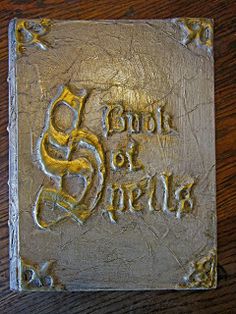
Free spell-writing worksheet
Enter an intention and one action you can take. The optional fields let you add your symbol and your own words. The worksheet arranges your notes into a draft; it does not calculate a power score or predict what will happen. Your entries are not sent or saved by this worksheet. Copy anything you want to keep before leaving the page.
Keep a draft you can return to
Save the date, the source of any tradition-specific idea, your own wording and what you chose to do. That gives a future version of you something clear to revisit. You do not have to keep every draft forever, and you can protect personal names and details when storing or discarding notes.
A spell written in your own voice can be modest and still feel meaningful. Let it express a value you want to live, give that value a symbol if you wish, and leave space for life and other people to be more complicated than a single sentence.
Spell-writing questions
1. Do I need special powers to write a spell?
You can write a personal symbolic ritual without claiming special powers. Begin with a purpose you understand, words you mean and an action you can choose. A formal tradition may have its own expectations for particular rites.
2. Does my spell have to rhyme?
No. Rhyme can make words memorable if you enjoy it, but ordinary sentences are fine. You can also write silently. Clear meaning matters more for this exercise than performing a particular style.
3. What if I choose the wrong words?
You can stop, cross out a phrase and try again. In this personal exercise, a wording mistake is an editing problem, not evidence that you have caused a supernatural disaster. Choose language that feels honest and respects other people.
4. Can I use a spell I found in a book?
You can study a shared example while respecting its source and any limits the author or tradition places on its use. Keep the source in your private notes. If you publish your own version, write original wording and do not present someone else’s text as yours.
5. Do I need herbs, crystals or a candle?
Not for the written practice here. Paper and a pen are enough. A drawing or an ordinary object can carry your chosen symbolism without requiring you to burn, drink or apply unfamiliar materials.
6. Can I write a spell about a particular person?
You can write about your own feelings, boundaries or conduct around that person. Leave their feelings and decisions to them. An intention to communicate clearly is different from requiring someone to love, forgive or contact you.
7. Must I wait for a particular Moon phase?
Only if that timing matters to the practice you have chosen. You can write and revise your draft whenever it suits you. A lunar association is part of a spiritual framework, not a guaranteed deadline for an outcome.
8. How long should the words be?
Use as much space as you need to state the purpose clearly, then remove phrases that do not help. A sentence or two can be enough for a simple personal practice. Length does not establish spiritual strength.
9. What should I do with the finished paper?
Keep it in a notebook, fold it beside a meaningful object or store it privately. You do not need to burn or bury it. When you no longer need it, protect any personal information and choose an ordinary suitable disposal route.
10. When should I review the spell?
Choose a review point that fits the action: after the conversation, after practising for a few days or when you next open your journal. This is a chance to learn from what happened, not a countdown proving that magic has worked.
11. What if the result is not what I hoped for?
Separate what you chose to do from what was outside your control. You can revise the practical plan, change your intention or stop the ritual. Disappointment does not mean that you owe anyone money for stronger work.
12. Does the worksheet predict whether my spell will work?
No. It arranges the words you enter into a readable draft and a practical next step. It does not measure psychic ability, rate spiritual power or predict another person’s choices. Your entries stay in this page and are not saved by the worksheet.