

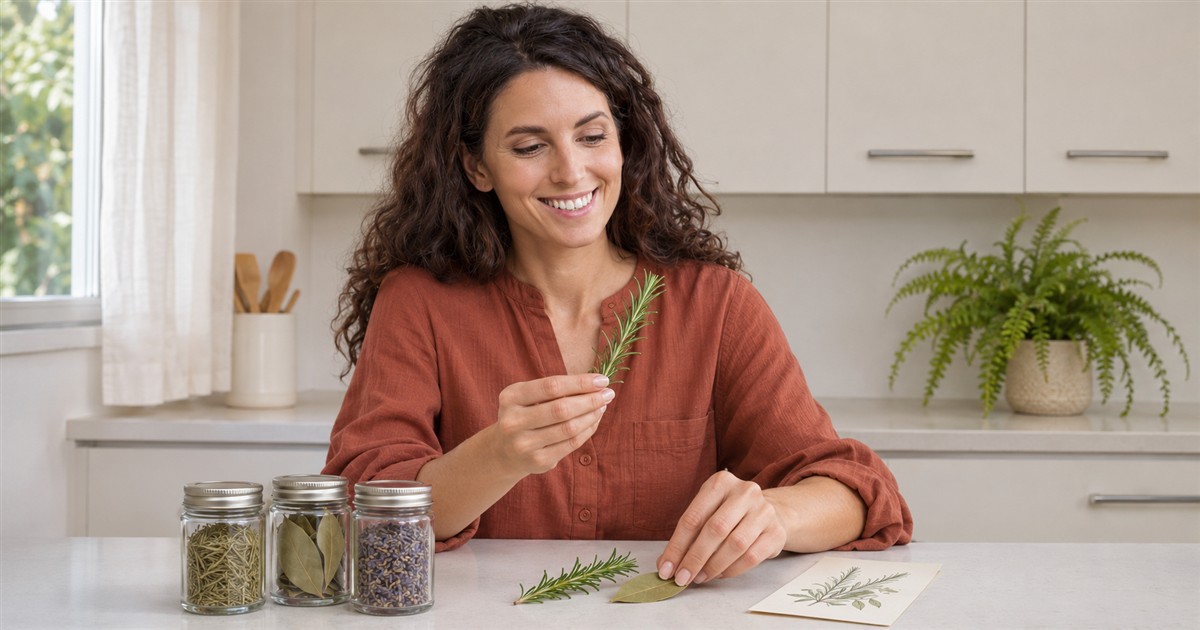
A sprig of rosemary at a personal altar or a bay leaf beside an intention can make a protection ritual feel grounded and familiar. In magical practice, herbs often carry associations with cleansing, courage, boundaries or blessing. Those meanings vary by tradition and by the memories you bring to the plant.
The seven plants below are options for a symbolic practice. You can use a botanical picture or a written plant name instead of handling a plant. Black salt sometimes appears on protection lists, but it is a separate preparation, not an herb.
Seven protection-herb ideas
1. Rosemary: a clear beginning
Use a picture of rosemary or a small identified sprig in a closed display container to mark a fresh start. Prompt: “What will I stop carrying into this space?” Pair it with tidying one surface.
2. Bay: a firm intention
Write your intention on paper beside a bay-leaf drawing. Prompt: “What boundary will I uphold?” Fold the paper and keep it private; there is no need to burn a leaf.
3. Garlic: a household boundary
Garlic appears in protective folklore. For this practice, draw a small bulb on an intention card rather than hanging food where children or animals can reach it. Prompt: “What makes this home feel cared for?”
4. Mugwort: careful attention
Mugwort has associations with dreams and threshold work in some modern practices. Use its name or an illustration here. Prompt: “What am I noticing, and what am I only assuming?” No tea, bath or smoke is needed.
5. Angelica: a blessing
Some practitioners associate angelica with blessing and guardianship. Choose a plant illustration if you cannot reliably identify it. Prompt: “What support am I willing to ask for?” Follow with one practical request.
6. Juniper: renewal
Juniper is used symbolically for cleansing in some traditions. Use an image or closed display rather than burning it or scattering berries. Prompt: “What can I put back in order?” Keep exits and surfaces clear.
7. Thyme: courage
Thyme makes a useful personal symbol for steady courage. A drawn sprig can accompany the words “I can take one careful step.” Choose a specific action that does not depend on an herb protecting you from danger.
Build a protection-herb card
- Choose one meaning. Pick the quality you want to welcome: steadiness, clarity, courage or support. You do not need all seven plants.
- Choose a representation. Use a picture, a written name or a reliably identified plant kept in a suitable closed container.
- Write your intention. Try: “May I care for this space and keep the boundaries that support me.”
- Name the action. For example, ask before sharing a private story, put a useful contact somewhere accessible or finish an ordinary household task.
- Close and store. Thank the plant or the space if that fits your tradition. Keep any physical materials securely stored and dispose of them appropriately when finished.
Choose the route of use carefully
A plant’s magical reputation is not a general safety instruction. This ritual does not call for eating herbs, adding them to bathwater, making oils or burning bundles. A familiar culinary name does not make every species, essential oil or plant part interchangeable.
Unknown plants, allergies, pregnancy, medicines and animals can change the practical questions. If you want to use a product on skin or for a health purpose, get advice appropriate to the exact product and your circumstances. Poison Control explains why concentrated essential oils need particular care. A plant illustration avoids direct exposure altogether.
Keep the tradition and the plant distinct
Do not present one correspondence list as universal or label every smoke practice with the name of a specific Indigenous ceremony. Learn the particular context when a practice belongs to a community or teacher. A personal card made with familiar imagery can remain meaningful without claiming an inherited ceremony.
For broader plant symbolism, see magical herbs and their uses. For a boundary-focused practice, try the paper-and-cord protective ritual. The spell-safety guide covers setup and material choices.
Questions about this practice
1. Which protection herb should I choose?
Choose a meaning that fits your intention and a representation you can use comfortably. No plant is required for every practitioner.
2. Do these herbs guarantee protection?
Their protective meanings belong to spiritual and folk practice. Do not treat a plant as proof that a real-world danger has ended.
3. Is black salt an herb?
No. Black salt is a separate preparation with varying ingredients, not a plant. Do not assume a ritual mixture is edible.
4. Why is thyme on this list?
It offers a courage theme for a personal protection card. This is an optional correspondence, not a universal rule.
5. Can I use a drawing instead of herbs?
Yes. A plant picture or written name can carry the symbolism without handling, scent or smoke.
6. Do I need to burn rosemary?
No. This practice is smoke-free and does not require burning any plant.
7. Can I put mugwort in tea or a bath?
This guide does not recommend that. Suitability depends on the exact plant, product and person; symbolic use does not establish safety for ingestion or skin.
8. Are dried herbs safe around pets?
Do not assume that. Keep plants, seeds, oils and small objects out of reach, and ask a veterinarian about species-specific concerns.
9. Can I use an unidentified garden plant?
No. Use an illustration if you cannot reliably identify the plant. Do not guess from a photo or a magical name.
10. Does essential oil replace the herb?
Not automatically. Concentrated oils and whole plants need different handling. A picture is the simplest substitute here.
11. Must I use all seven plants?
No. One clear intention and one symbol are enough for the card ritual.
12. Can I make a protection gift?
Ask whether the recipient wants it and explain what it contains. A paper card avoids introducing an unwanted scent or plant.
13. Should I scatter herbs outdoors?
Avoid leaving ritual materials in public places, waterways or habitats. Follow appropriate local disposal rules.
14. Can I adapt the words to my faith?
Yes. Use language that fits your beliefs, while learning the context of any borrowed sacred name or ceremony.
15. What should I do after the ritual?
Take the practical action you chose, store materials securely and revisit the intention when it is useful.