

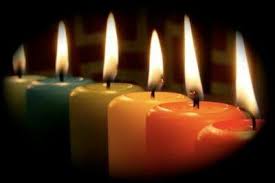
Choosing a candle can be a small act of intention. You may reach for pink when you want to be kinder to yourself, blue before a difficult conversation, or white when you need a fresh page. The colour gives your attention somewhere to land.
There is room for personal meaning here. A colour that feels peaceful to one person may bring up a different memory for another. Use the guide below as a starting point for your own practice, and let a symbol earn its place by making sense to you.
Finish this sentence: “Today I want to bring more _____ into the way I act.” Choose a colour that reminds you of that quality. A candle you already own, an LED light or a coloured note can all serve as a focus.
Free candle-colour suggestion
Choose a focus to see a colour suggestion, what it can represent and one practical next step. The suggestion uses the focus you select; you can adapt it to your own associations.
Candle colour meanings at a glance
These are common associations in contemporary candle practice. The question beneath each meaning turns a broad symbol into something you can use. You do not have to use the same colour forever or accept every association in a chart.
White
Symbol: Clarity, peace and a fresh start.
Try this: Name the one thing you want to understand more clearly.
Red
Symbol: Courage, passion and purposeful energy.
Try this: Choose a brave step that respects everyone involved.
Pink
Symbol: Tenderness, friendship and affection.
Try this: Think of one way to show care without asking for a particular response.
Yellow
Symbol: Learning, ideas and clear expression.
Try this: Write the question you want to explore before seeking an answer.
Green
Symbol: Growth, renewal and abundance.
Try this: Choose something you can nurture patiently, such as a habit or a skill.
Blue
Symbol: Calm, honest communication and steadiness.
Try this: Practise a sentence you want to say clearly and kindly.
Purple
Symbol: Intuition, spiritual reflection and wisdom.
Try this: Record an impression and a question to reflect on later.
Black
Symbol: Boundaries, protection and release.
Try this: Name something you are ready to decline or stop carrying.
Brown
Symbol: Grounding, home and stability.
Try this: Choose an ordinary action that makes your space feel more settled.
Orange
Symbol: Creativity, enthusiasm and initiative.
Try this: Give a small idea a practical first step.
Gold
Symbol: Appreciation, achievement and purposeful work.
Try this: Recognise a real effort, then choose the next manageable task.
Silver
Symbol: Lunar symbolism, dreams and reflection.
Try this: Keep a brief dream or reflection note without forcing a prediction.
Grey
Symbol: Balance, uncertainty and a pause for perspective.
Try this: Write what you know, what you do not know and what can wait.
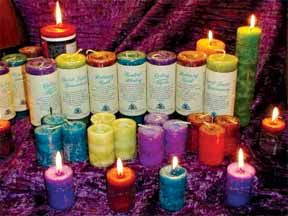

What about lavender, copper and other shades?
A shade can add nuance to a meaning you already like. Lavender may suggest a gentler kind of reflection, while indigo may suit a quiet, inward focus. Magenta can combine the warmth of pink with the boldness of red. These are optional ways to describe your intention, not levels of power.
Light blue can remind you of patience, and royal blue of steady, confident expression. Emerald green can represent enjoying growth and connection; dark green may invite you to examine ambition or comparison. Copper can be a symbol for the everyday work behind a goal. Choose a shade because its meaning helps, rather than worrying that a slightly different candle will spoil the practice.
Make the meaning personal
Try writing three short lines before you choose a candle:
- My association: “To me, this colour brings to mind…”
- My intention: “I want to make more room for…”
- My action: “One way I can practise that today is…”
For example, yellow might remind you of a bright kitchen where you felt listened to. Your intention could be to speak more openly, and your action could be preparing one honest question for a conversation. Someone else may use yellow for study. Both choices can be meaningful without making the colour a promise about what happens next.
For love, the difference between pink and red can be a useful prompt: are you looking for tenderness, courage, passion, or a combination? Our love candle ritual guide includes a private intention journal and examples for new connections and willing partners.
Choosing a candle for intuitive reflection
If you value psychic practice, purple, white or silver may feel like natural companions for a reflective moment. You might use the light while writing a question, noticing an impression or recording a dream. Keep what you observed separate from the meaning you give it, especially when another person is involved.
Silver is sometimes associated with clairvoyance and lunar symbolism. That association can be a personal cue to pause and listen inwardly; it does not establish that a vision is accurate. You can appreciate an intuitive impression while still asking questions and checking what is happening in ordinary life.
Shape, scent and the candle you already own
A plain candle is enough for this practice. A taller candle is not automatically stronger, and an elaborate shape does not prove a deeper connection. Consider whether the candle suits its holder and your space, whether you enjoy its scent and whether you can follow its instructions comfortably.
You can keep one suitable candle for repeated reflection if that feels right to you. If you prefer a fresh symbolic beginning, start a new journal page rather than assuming you must buy new wax. An unlit candle or a flameless light also lets you use colour without handling an open flame.
For a real candle, follow the label, use a stable holder and keep it attended and well away from anything that can burn. Extinguish it before leaving or getting sleepy. Do not add craft glitter, paint or loose decorations to wax. The U.S. Fire Administration’s candle guidance offers practical precautions. Our beginner candle guide and free preparation check can help you plan a simple session.
The most useful colour is one you can explain in your own words. Let it remind you of a quality you want to practise, then give that quality a place in your day.
Questions about choosing a candle colour
1. Does the candle colour determine whether a ritual works?
Colour gives you a symbol to work with; it does not establish a guaranteed result. A useful choice is one that helps you remember your intention. What you notice and do afterward matters more than buying a precise shade.
2. Can white replace a colour I do not own?
Yes. White is often used as a versatile choice in contemporary candle practice. You can also use an unlit candle, an LED light or a written colour name. There is no need to buy a set of candles before beginning.
3. Is a black candle unlucky or harmful?
The colour black is not inherently harmful. Many practitioners use it to represent boundaries, protection or letting go. If the symbolism makes you uncomfortable, choose another colour that expresses the same intention more comfortably.
4. Do I need a brand-new candle every time?
No universal rule requires a new candle for every personal practice. Reusing a suitable candle can be meaningful. Check that it remains in good condition and follow its maker’s instructions; do not use damaged containers or burn a candle past its stated stopping point.
5. Should I choose a colour for love or passion?
Pink can be a gentle symbol for affection, while red can represent passion or courage. Choose according to the quality you want to bring to a willing relationship. Neither colour can make another person want a relationship or override their answer.
6. Can candle colour improve my health or finances?
A colour can mark a personal intention, such as treating yourself kindly or working on a budget. It cannot diagnose illness, deliver treatment, predict an investment result or guarantee money. Use practical support appropriate to the issue rather than relying on a candle to resolve it.
7. What if two colour guides disagree?
Colour associations vary among traditions and individual practitioners. Check whether a guide is describing a particular spiritual path or offering a general reference. For your own informal practice, choose an association you understand instead of trying to combine every rule.
8. Can I use more than one colour?
Yes, if it helps you express a clear intention. Two colours can represent complementary qualities, such as kindness and honest communication. You can use coloured notes or flameless lights instead of adding more flames.
9. Are metallic candles and glitter suitable for burning?
Use only products intended to be burned as candles, and follow their labels. Do not add craft paint, glitter, foil or loose decorations to wax. A gold or silver object kept safely away from heat can provide the symbolism without altering a candle.
10. What does the free colour suggestion mean?
It pairs the focus you select with a common symbolic association and a suggested next step. It does not assess your personality, read your energy or predict an outcome. You are free to choose a different colour or use white instead.