
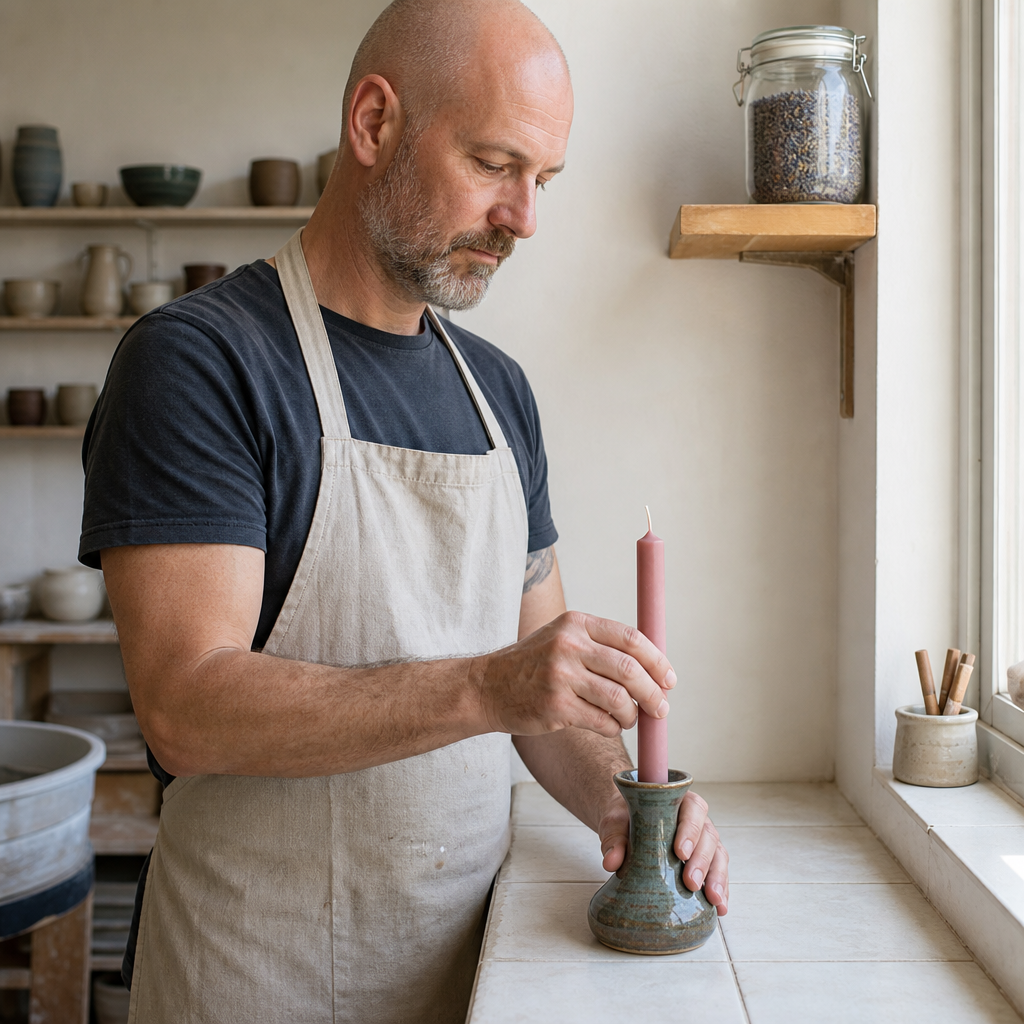
Love spell safety is broader than choosing a calm room or using the “right” ritual tools. The supplied draft correctly raises several different kinds of safety at once: physical safety around candles and herbs, emotional balance, free will, realistic expectations, and avoiding practitioners who use fear or pressure.
This guide turns those ideas into a practical checklist for beginners and experienced believers.
1. Start with the Intention
Before using any ritual tool, ask what you are trying to accomplish. Safer intentions focus on your own choices or on mutual relationship goals:
- Become more open to compatible love.
- Build confidence after heartbreak.
- Encourage honest communication in an existing relationship.
- Reflect on whether reconciliation is healthy.
- Practice gratitude or self-love.
Trying to override a specific person’s refusal, boundaries, or decisions is a very different goal. Our older article on whether it is safe to cast a love spell is a useful companion to this broader checklist.
2. Respect Free Will and Consent
No spiritual interpretation should be used as permission to pressure, monitor, repeatedly contact, or pursue someone who has said no. A dream, tarot card, repeating number, or intuitive feeling may be personally meaningful, but it is not consent.
For relationship-focused practice, safer language is “may mutual love grow where it is genuine” rather than “make this person choose me.”
3. Use Candles Like Open Flames—Because They Are
Candles are common in love rituals, but symbolism does not change basic fire risk. The National Fire Protection Association advises keeping candles at least 1 foot (30 cm) from anything that can burn, using sturdy holders, and extinguishing candles before leaving a room or going to sleep. See the NFPA candle safety guidance.
- Use a stable, heat-resistant holder.
- Keep candles away from curtains, books, bedding, paper, dried herbs, and decorations.
- Keep flames away from children and pets.
- Never leave a burning candle unattended.
- Keep loose clothing and hair away from flame.
- Use a flameless candle when open flame is unnecessary.
Our guide to using candles for magic discusses the symbolic side; physical fire safety still comes first.
4. Be Careful with Herbs, Smoke, and Oils
Plants used symbolically are still physical substances. “Natural” does not mean safe to burn, inhale, swallow, place on skin, or use around pets. If you do not know what a herb or oil is, do not ingest it or apply it to your body.
- Do not burn unknown plants indoors.
- Ventilate rooms when using incense or smoke.
- Avoid ingredients that trigger allergies or irritation.
- Keep essential oils away from eyes and use them according to product directions.
- Do not treat ritual herbs as medical treatment.
- Store herbs and oils away from children and pets.
For symbolic background, see our guide to magical herbs and their traditional uses.
5. Crystals Are Symbols, Not Medical Tools
Crystals may carry spiritual meaning for believers, but they should not replace medical care or be used in unsafe ways. Avoid putting unknown minerals in drinking water or using crystal elixirs unless you have reliable mineral-safety information. A crystal can simply sit nearby as a symbolic focus.
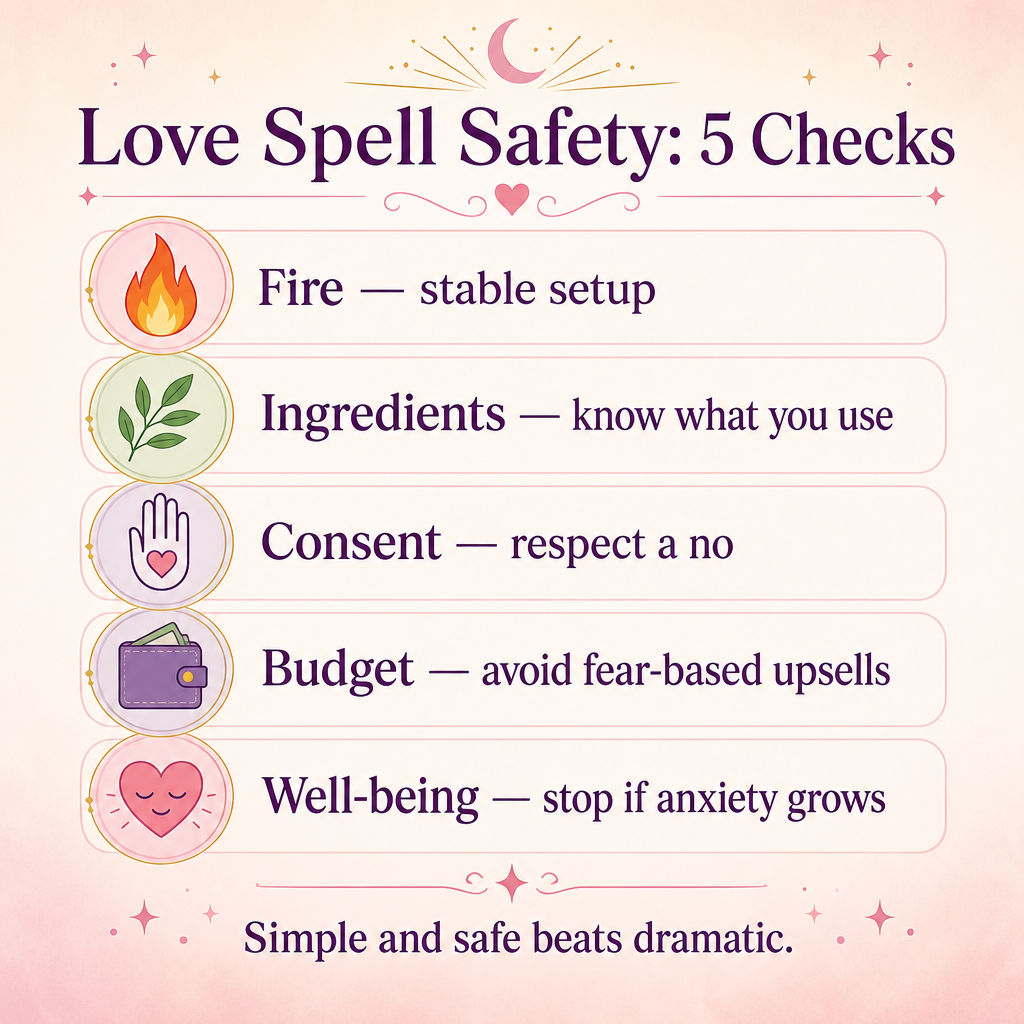
Love Spell Safety: Five Checks Before You Begin
6. Check Your Emotional State
Rituals performed during intense panic, jealousy, grief, or desperation can become part of a cycle of rumination. Before beginning, ask:
If not, delay the ritual.
Separate facts from hoped-for signs.
Do not let ritual checking take over daily life.
Healthy practice leaves room for uncertainty.
Journaling, meditation, walking, or talking with someone you trust can be more useful than adding another ritual when emotions are overwhelming.
7. Set a Budget Before Paying a Practitioner
Spiritual services can become financially risky when fear is used to trigger repeated purchases. Be cautious if someone says:
- A curse must be removed immediately.
- Only they can prevent something terrible from happening.
- You need a more expensive ritual every few days.
- A guaranteed result requires one more payment.
- You must keep paying or previous work will reverse.
The U.S. Federal Trade Commission provides general consumer guidance on scams and what to do if you paid someone you believe was fraudulent at FTC Consumer Advice.
8. Know What a Trustworthy Practitioner Sounds Like
A responsible practitioner should be able to explain what they offer, what it costs, and what they cannot guarantee. Positive signs include:
- Transparent pricing.
- No claims of guaranteed control over another person.
- No threats about curses or consequences.
- No pressure to keep buying upgrades.
- Respect for consent and personal boundaries.
- Willingness to say that a situation may require practical or professional help.
9. Choose the Simplest Safe Ritual That Fits
Complexity does not prove power. A quiet intention, journal entry, meditation, prayer, gratitude practice, or flameless candle may be just as meaningful as a larger ceremony. Our love spell glossary explains many common terms and tools without requiring that you use them all.
10. Know When Not to Use a Love Spell
Do not use spiritual practice as a substitute for urgent safety decisions. If a relationship includes threats, violence, stalking, coercive control, or serious financial abuse, prioritize safety and qualified support. If you have a medical or mental-health concern, seek appropriate professional care rather than relying on a ritual.
Frequently Asked Questions
1. Are love spells physically safe?
They can involve ordinary hazards such as open flame, smoke, oils, or herbs. Use standard physical safety precautions.
2. Is a flameless candle acceptable?
Yes. If the candle is symbolic, a battery-operated candle can remove the open-flame risk.
3. Can I leave a ritual candle burning overnight?
No. Open flames should not be left unattended or burning while you sleep.
4. Are all herbs safe to burn?
No. Only burn materials you can identify and use safely in a ventilated environment.
5. Can I drink crystal water?
Do not put unknown minerals in drinking water. Some minerals can release unsafe substances.
6. Is it safe to target a specific person?
A safer ethical approach focuses on mutual, compatible love rather than overriding another person’s choices.
7. Are dreams or signs consent?
No. Consent comes from the person, not from symbolic interpretation.
8. Should I repeat a spell every day?
Constant repetition can increase anxiety. Many believers prefer one clear intention followed by reflection and everyday life.
9. How much should I spend on a practitioner?
Set a budget you can afford to lose and avoid anyone who uses fear or escalating emergency payments.
10. Are guaranteed results a good sign?
No. No practitioner can guarantee another person’s feelings or decisions.
11. What if someone says I am cursed?
Do not let fear force an immediate payment. Seek a second perspective and protect your finances.
12. Can love spells replace counseling?
No. Spiritual practice may be personally meaningful, but it is not a substitute for qualified relationship or mental-health support.
13. What is the safest beginner practice?
Journaling, meditation, gratitude, prayer, or a flameless-candle intention ritual are low-risk starting points.
14. Do I need crystals or special tools?
No. Tools are optional symbols; intention and reflection do not require special objects.
15. When should I stop a ritual?
Stop if you feel unsafe, pressured, physically unwell, financially exploited, or increasingly obsessed with getting one specific outcome.
Final Thoughts
Safe love magic is less about collecting the right objects and more about using judgment. Protect yourself from fire and unsafe substances, respect another person’s free will, keep expectations realistic, and never let fear-based sales tactics control your spending.
A ritual can remain spiritually meaningful while being simple, grounded, and physically safe. The wisest practice is one that leaves you with more clarity, not more fear.
What I really enjoyed was the clear prioritization of physical safety alongside spiritual intention. The reminders about ventilation, allergy risks, and flame precautions are practical and often overlooked. Pairing ritual practice with everyday judgment makes spiritual work feel grounded and respectful.
The synthesis of ethical considerations with tangible safety protocols is exemplary. I particularly appreciated the nuanced discussion on consent framed as an ongoing respect for autonomy rather than as metaphysical justification, and the encouragement to favor minimal, symbolic rituals over elaborate, risky procedures.
Nice write-up! I like how it tells people to be careful with real things like smoke and candles. It also says to watch your money and not believe promises that sound too good. Very smart and kind advice.
Lovely and reassuring post! I feel encouraged to choose simple rituals like journaling, prayers, or a battery candle instead of risky practices. The guidance about not targeting someone specifically and about seeking help for abusive situations is especially comforting and wise 😊.
This piece provides an elegant framework for integrating ethical concerns with pragmatic safety measures. I especially appreciated the call to prefer mutual, compatible intentions and the practical steps for identifying trustworthy practitioners. A sober, humane approach that demystifies spiritual practice without dismissing meaning.
This guide is really helpful and simple to follow, thank you! I like the clear rules about candles and herbs, and the part about respecting other people’s choices. I feel safer trying a small, calm ritual now 😊.
This article is thorough and compassionate, offering both pragmatic safety steps and ethical guidance. I admire the emphasis on avoiding coercive rituals and on transparent, non-predatory practitioners. Useful links and concrete examples make it easy for readers to act responsibly.
I appreciate how this post blends practical safety with ethical reminders. The checklist about free will, budgets, and when to seek professional help feels honest and useful. I especially value the emphasis on simple practices like journaling over risky rituals.
Great points here — balance is everything. The section on emotional state before ritual really stood out to me: delaying a ceremony until you are calmer is such sensible advice. This reduces harm and makes any practice more meaningful and sustainable.
This is a balanced and compassionate resource that will help both newcomers and experienced practitioners. I appreciate the practical safety checks—fire, herbs, emotional state, and financial caution—and the repeated emphasis on consent and realistic expectations, which protects vulnerable people.
This article strikes a great balance between reverence and caution. I appreciate guidance that makes space for spiritual meaning while insisting on real-world common sense: fire safety, allergy awareness, consent, and stopping when something feels unhealthy. Very grounding and humane advice.
Such a thoughtful guide! I loved the five checks and the explicit warnings about scams and pressure-based pricing. The reminders to stop if things feel unsafe or obsessive are very important, and the suggestion to use flameless candles when possible is smart and practical.
Really grateful for this clear, no-nonsense guidance. The sections on crystal safety and not substituting rituals for medical or psychological care are spot-on. I also like the consumer-protection tips about budgets and red flags for manipulative practitioners; very useful for beginners.
Totally agree, and I want to add that keeping a ritual simple preserves its intention. When ceremony doesn’t become a financial or emotional trap, it can support growth without creating dependency. Practical wisdom here that anyone can follow safely.