

Love-spell traditions are not only about attracting a new partner or reconnecting with an ex. Some rituals are intended for couples who are already together and want to focus on trust, appreciation, communication, or renewed closeness.
Relationship harmony rituals are spiritual or symbolic practices, not scientifically proven ways to repair a relationship. They work best as a meaningful structure for reflection and shared intention alongside honest communication, consent, and everyday effort.
What Relationship Harmony Spells Focus On
Rather than trying to change a partner’s personality or force affection, harmony-focused practices usually center on qualities both people want to strengthen.
- Trust and reliability.
- Open communication.
- Patience during conflict.
- Emotional safety.
- Gratitude and affection.
- Shared commitment.
This is similar to the intent behind a respectful binding ritual when the emphasis is on an existing mutual bond rather than control. Another related guide is White Magic and Fixing Relationships.
Why Shared Intention Matters
A relationship ritual becomes more constructive when both partners know what they are working toward. One person may want more affection while the other wants less conflict. Naming the shared goal can turn a vague wish for “stronger love” into something practical.
Examples of shared intentions include: “We want to listen without interrupting,” “We want to make more time for each other,” or “We want to rebuild trust through consistent actions.”
Simple Relationship Rituals Couples Can Share
Gratitude candle reflection
Light a candle safely and take turns naming one thing you appreciate about the other person. The candle is symbolic; the useful part is the intentional exchange of appreciation.
Intention letters
Each partner writes a short note describing what they hope the relationship feels like over the next few months. Compare the themes and choose one shared goal.
Shared walk
Take a phone-free walk and discuss one hope, one challenge, and one thing you are grateful for in the relationship.
Thirty-day gratitude journal
Each person writes one specific appreciation every day. Specific observations such as “You checked in when I was stressed” are more useful than repeating a general phrase.
Spiritual Practice Plus Everyday Behavior
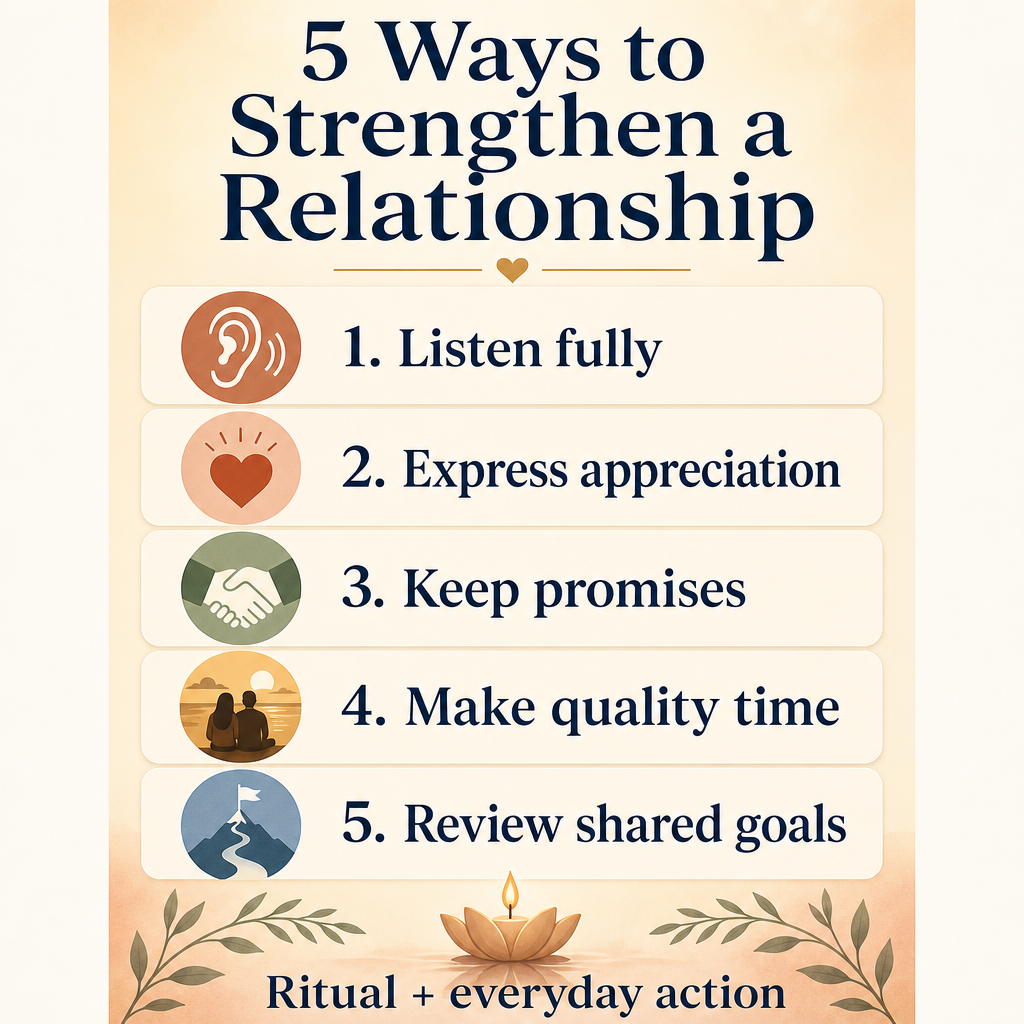
A ritual cannot replace the actions that make relationships safer and more satisfying. If the intention is trust, keep promises. If the intention is communication, listen and speak honestly. If the intention is closeness, create regular time together.
- Listen without preparing your rebuttal.
- Repair misunderstandings instead of keeping score.
- Show appreciation in ordinary moments.
- Respect each other’s boundaries and independence.
- Discuss shared plans instead of assuming agreement.
What a Relationship Spell Cannot Do
A harmony ritual cannot make an unwilling partner participate, erase serious incompatibility, or make harmful behavior acceptable. If one person repeatedly lies, threatens, controls, or ignores boundaries, the priority should be safety and clear decision-making rather than a ritual intended to preserve the relationship at any cost.
A Five-Step Harmony Practice
- Agree on one shared relationship intention.
- Choose a simple symbol such as a candle, flower, or written note.
- Each person says what the intention means in practical terms.
- Choose one action each partner will take during the next week.
- Review what changed and decide what needs continued attention.
Signs of Meaningful Progress
Instead of looking only for spiritual signs, notice patterns in the relationship itself. More respectful conversations, greater reliability, easier repair after disagreements, more laughter, increased appreciation, and stronger teamwork are practical signs that the relationship is moving in a healthier direction.
When a Ritual Is Especially Meaningful
Couples sometimes use symbolic rituals around anniversaries, moving in together, marriage, renewing vows, recovering from a stressful period, or starting a new life chapter. The date itself is less important than the shared intention and willingness to follow through.
Frequently Asked Questions
1. Can couples perform relationship love spells together?
Yes. Many believers find a shared ritual more meaningful because both partners can name the intention and participate willingly.
2. Are harmony spells different from attraction spells?
Yes. Harmony rituals focus on an existing relationship, while attraction rituals are generally associated with openness to new romantic opportunities.
3. Can a ritual replace communication?
No. Communication, trust, boundaries, and consistent behavior are still necessary for a healthy relationship.
4. When is a good time for a relationship ritual?
Anniversaries, milestones, stressful transitions, or any quiet time when both partners want to reconnect can be meaningful.
5. Do both partners have to share the same spiritual beliefs?
No, but both should be comfortable with the activity and agree on the practical relationship intention.
6. Can a love spell fix recurring arguments?
A ritual may create space for reflection, but recurring conflicts usually require different communication habits and attention to the underlying issue.
7. Are gratitude rituals considered love spells?
Some practitioners see them that way, while others view them simply as spiritual or relationship practices. Either way, the focus is appreciation.
8. Do we need candles or crystals?
No. Symbolic tools are optional. A conversation, journal, shared walk, or written intention can be enough.
9. Can a relationship ritual rebuild trust?
It can symbolize a commitment to rebuild trust, but trust itself returns through honesty, reliability, accountability, and time.
10. What if only one partner wants to continue the relationship?
A ritual cannot create mutual commitment. Both people must freely choose whether to continue.
11. Are anniversary rituals useful?
They can provide a meaningful time to appreciate the relationship, review shared goals, and renew commitments.
12. Can beginners try harmony rituals?
Yes. Simple gratitude, journaling, meditation, or intention-setting practices are accessible to beginners.
13. What are healthy signs of progress?
Look for better communication, more reliable behavior, respectful conflict repair, appreciation, teamwork, and mutual affection.
14. Can a ritual help during a stressful period?
It may create a calm moment to reconnect and clarify priorities, but practical stressors still need practical solutions.
15. What is the best intention for an existing relationship?
Choose a specific shared quality such as trust, communication, gratitude, patience, closeness, or teamwork rather than trying to control a partner.
Final Thoughts
Relationship love spells are most constructive when they serve as shared reminders to care for a bond that already exists. A ritual can create a meaningful pause for gratitude or intention, but the relationship grows through what both partners do afterward: communicate, keep promises, repair conflict, and continue choosing each other freely.
I really like how this post frames relationship rituals as tools for shared intention and everyday effort. The practical examples like gratitude candles, intention letters, and phone-free walks feel accessible and gentle. It reminds me that consistent small actions create trust and closeness over time, and that rituals can help people stay mindful of what they actually want to build together. Thank you for grounding spiritual ideas with realistic advice. 💖
I love the ethical clarity in this article: rituals framed as shared commitments respect autonomy while creating space for reflection. The FAQ answers are particularly useful for beginners who might be unsure where symbolism ends and responsibility begins. This balanced guidance could help couples navigate transitions with more compassion and accountability, and the focus on observable signs of progress is practical and empowering. 🌻
This article elegantly balances the symbolic and the pragmatic, reminding readers that ritual can illuminate intentions without usurping agency. I appreciate the clear boundaries: rituals are complements to accountability, not substitutes for safety or structural change. The emphasis on mutual consent and measurable actions makes these practices ethically sound and psychologically useful, encouraging couples to pair symbolic moments with concrete follow-through. Thank you for such thoughtful guidance. 🌿
I liked what Carrie said about consent and follow-through. It helps to remember rituals are not quick fixes but a way to begin new habits and conversations. Simple ideas like writing intentions or taking a quiet walk together feel safe and kind, and they can open the door to clearer communication. I would try a gratitude journal or a short weekly check-in with my partner. 😊
Completely agree with your emphasis on consent and measurable action, Carrie. When both partners articulate shared goals and specify concrete steps, rituals become checkpoints rather than magic fixes. That shift makes it easier to evaluate progress, celebrate small wins, and adjust behavior over time. I appreciate the grounded tone here and the focus on mutual responsibility. 👍
I appreciated how the article separates symbolic ritual from real relationship work and highlights the need for consent and consistent behavior. The step-by-step suggestions and signs of progress are practical and encouraging, especially for couples who want a gentle reset. I plan to try the thirty-day gratitude journal with my partner and then review what actually changed, which seems like a useful experiment. 💫
I love the playful simplicity of the gratitude candle and the thirty-day journal idea. Little rituals like these help partners notice each other and slow down the day, which feels really hopeful. Even when life gets busy, these small, regular habits can make affection and appreciation more visible. I’m saving a few of these suggestions to try together because they seem so doable and kind. 😊
This is a nice read. It makes doing little things together feel important and reachable. Saying thanks, taking walks without phones, and writing short notes are simple habits that can grow into bigger trust. I like that the post says actions matter more than magic and that both people should agree. It makes me want to try these ideas with my partner soon. 😊
What resonates most here is the insistence that rituals should augment, not replace, concrete relational work. The five-step practice and emphasis on shared intentions provide a thoughtful scaffold for repair and growth; pairing symbolic acts with measurable behavioral commitments can transform abstract wishes into tangible shifts in everyday interactions. The nuance about consent and safety makes this guidance both responsible and humane. ✨
This is a warm and helpful guide that feels realistic. The part about naming a shared goal really stood out because it makes intentions tangible and easier to talk about. I appreciate the nice examples like walking, writing letters, and short gratitude notes; they seem simple to start and could gently bring people closer without pressure. I’m inspired to try a weekly walk and a short note exchange. 😊
This post made the idea of fixing up a relationship feel easy and safe. I like how it says small things matter, like saying thank you and taking walks together, and that a candle or a short note can be a nice start. Those simple steps seem cozy and real, and I want to try the candle reflection and a brief gratitude note with my partner. 💕
I appreciate Tater Tot’s eagerness and the gentle tone here. Beginning with simple rituals often lowers resistance and builds momentum for substantive change; the real work is pairing ritual with consistent behaviors such as honoring boundaries and following through on small promises. Over time, that steady combination cultivates trust and makes symbolic actions actually meaningful in everyday life. 🌼
Simple, repeatable practices are the best part of this piece because they feel sustainable and adaptable to busy lives. I especially value the concrete examples and the reminder to define practical meanings for intentions; that turns vague wishes into measurable steps couples can practice week by week. The signposts for progress are encouraging and help keep expectations realistic while still hopeful. Thanks for this clear guide. 🙏